Start With the Training Goal
Equipment selection should follow the training goal — not the other way around. Before buying anything, be clear about what you are trying to accomplish.
Common goals for men returning to strength training include:
- rebuilding general strength
- training consistently at home
- improving basic movement capacity
- supporting muscle maintenance
- adding resistance progressively over time
Start with the movements and the training outcomes you care about. Then choose equipment that supports those movements. Do not start with gadgets.
How Much Equipment Do You Really Need?
A useful concept is the minimum effective home setup — the smallest set of equipment that lets you train the fundamental movement patterns with progressive resistance.
The core movement patterns to consider are:
- squat / sit-to-stand
- hip hinge
- horizontal and vertical push
- horizontal and vertical pull
- loaded carry
- basic core stability
Adjustable dumbbells and resistance bands can cover most of these patterns in a small space. Exercise variety, progressive resistance, available space, and budget all influence how much equipment makes sense for you.
More equipment does not automatically mean better training. The table below summarizes how common home strength equipment fits a practical setup.
Home Strength Equipment at a Glance
A quick summary of how each type of equipment fits a practical home setup. This is illustrative, not an individualized prescription.
| Equipment | Best For | Space Needed | Priority |
|---|---|---|---|
| Adjustable Dumbbells | Progressive strength training | Low–Moderate | High |
| Resistance Bands | Portable resistance / accessories | Very Low | High |
| Adjustable Bench | Expanding exercise options | Moderate | Medium |
| Large Home Gym Equipment | Higher training variety | High | Low initially |
| Recovery Tools | Comfort / mobility support | Low | Optional |
Adjustable Dumbbells
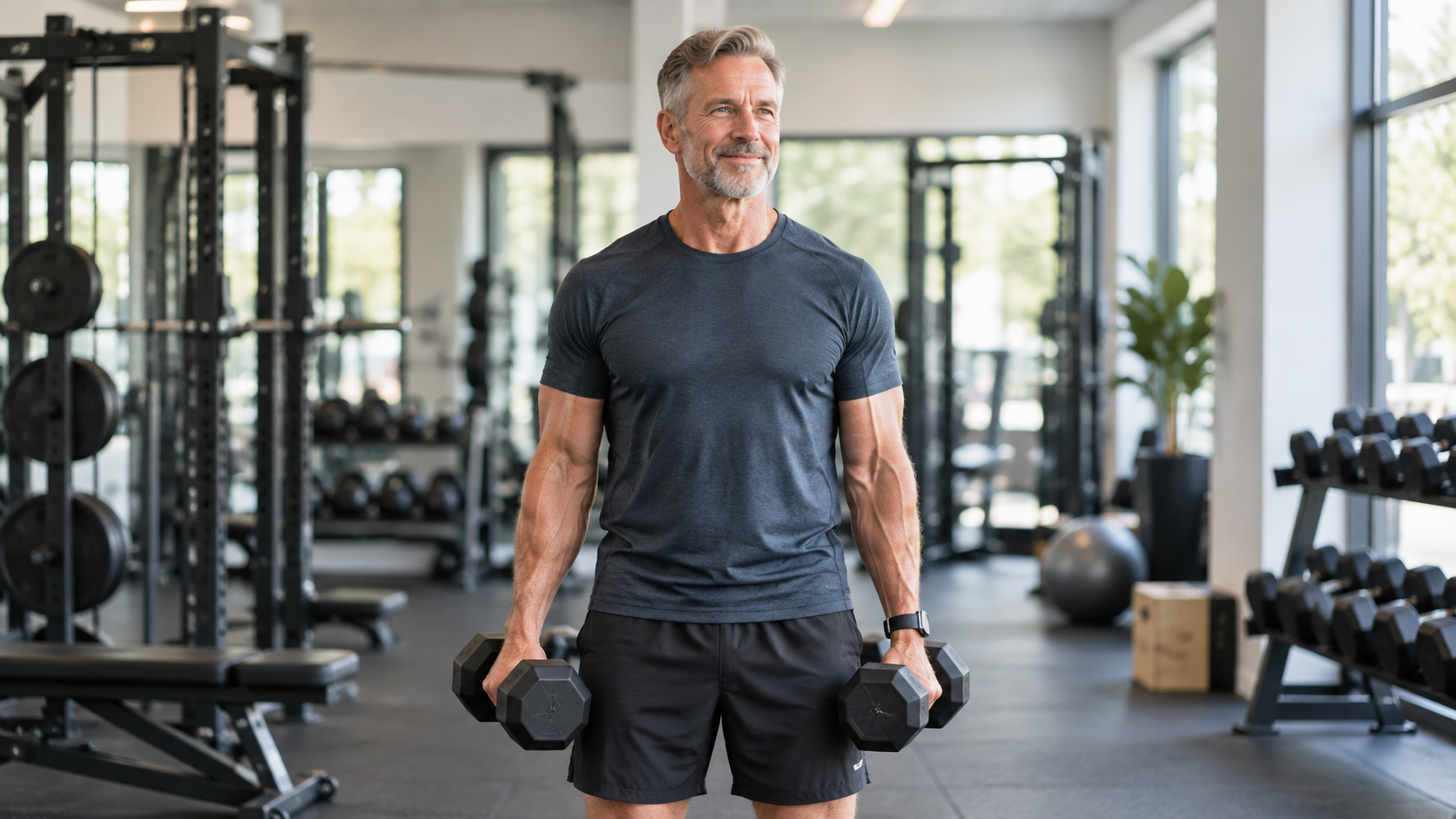
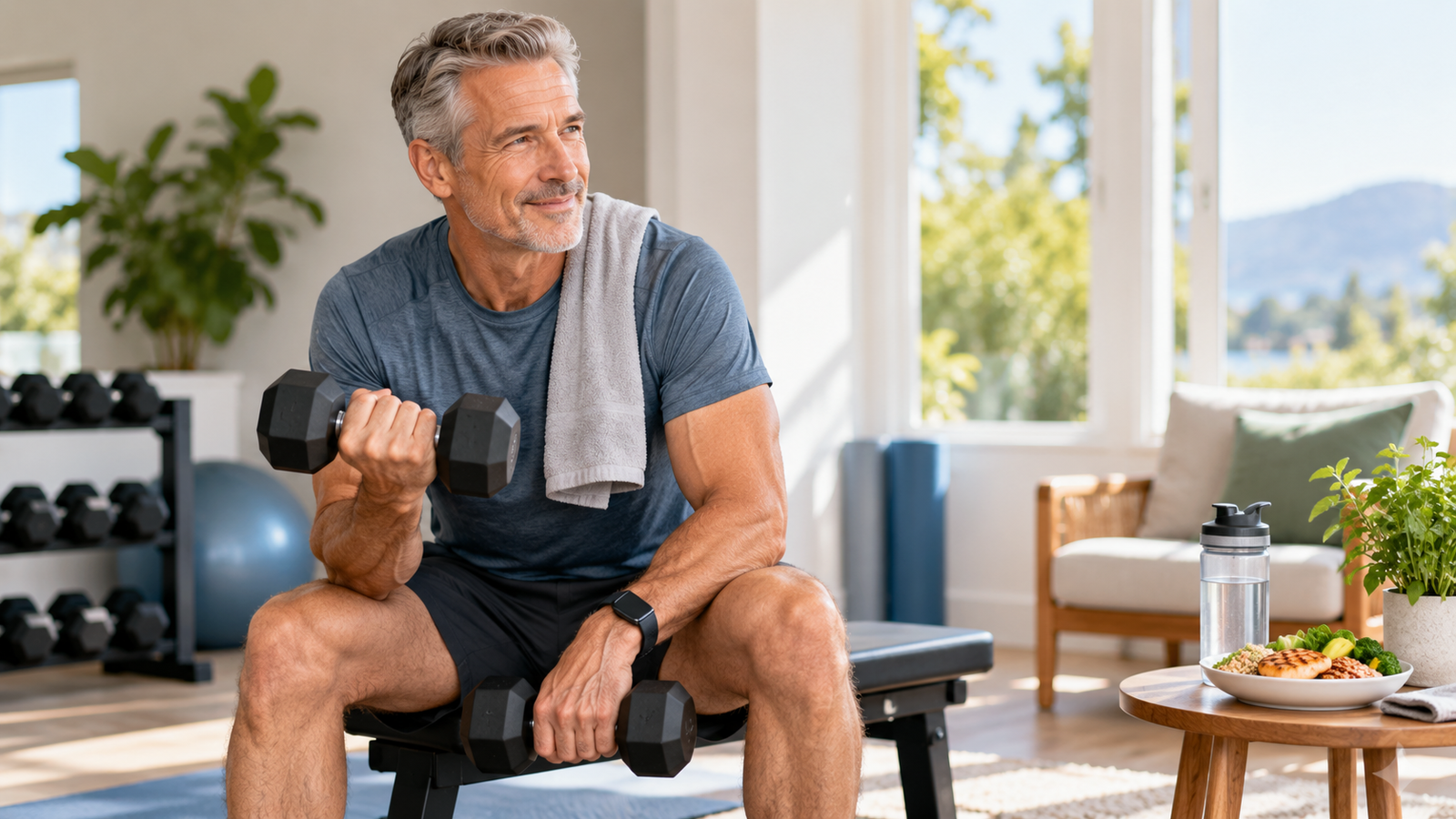
Adjustable dumbbells are one of the most useful pieces of home strength equipment. They combine multiple resistance levels in a compact footprint, which makes progressive resistance practical at home.
They support a wide range of movements, including:
- presses (floor, bench, overhead)
- rows and pulls
- squats and lunges
- hip hinges like Romanian deadlifts
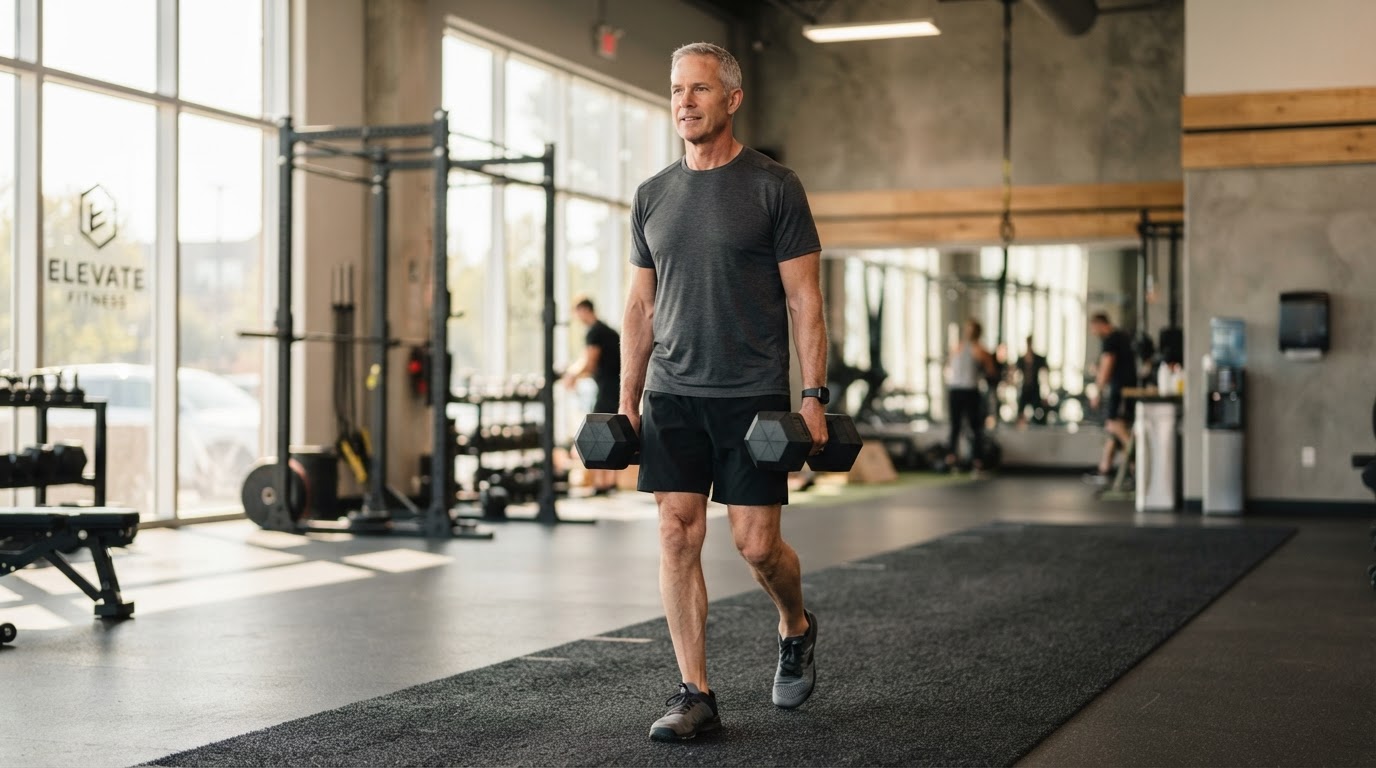
- loaded carries
When considering adjustable dumbbells, think about:
- Weight range — enough to challenge you now and leave room to grow.
- Adjustment mechanism — speed and ease of changing weights.
- Handle comfort and grip.
- Footprint and storage.
- Durability for long-term use.
Learn more in the adjustable dumbbells guide. This pillar guide does not recommend specific brands unless a product has been separately approved for TrueMontis.
Resistance Bands
Resistance bands are inexpensive, portable, and versatile. They can be a practical first purchase for many home setups.
Bands are useful for:
- warm-ups and activation work
- accessory and isolation exercises
- pulling movements when you lack a pull-up bar
- travel training
Common types include:
- Loop bands — continuous bands, useful for lower-body work and mobility.
- Tube bands with handles — good for presses and rows.
- Long resistance bands — versatile for assisted movements and stretching.
Explore options in the resistance bands guide. Bands provide variable resistance — harder at the end of the movement — which is a different feel than free weights but effective for many purposes.
Benches & Strength Gear
A bench expands your exercise options but is not always essential on day one. It allows for:
- supported presses (flat and incline)
- supported rows
- split squats and step-ups
- seated exercises
What matters when choosing a bench:
- Stability — a wobbling bench is unsafe for pressing.
- Weight capacity — check the rated limit.
- Adjustability — flat and incline options add versatility.
- Footprint and ease of storage.
See the weight bench guide for more. Add a bench when your training plan actually calls for movements that require one.
Home Gym Equipment
Beyond dumbbells and bands, there are times when it makes sense to expand your setup. Larger equipment should come only when the training plan justifies it.
Possible additions include:
- pull-up or suspension trainers
- kettlebells
- cable systems
- compact racks
- larger home gym machines
Each of these adds training variety, but also requires more space, budget, and a clear reason to use it consistently. A compact rack or cable system can be a strong investment for a dedicated training space — but only if it matches your goals.
Browse the home gym equipment subcategory for guidance on larger setups.
Recovery Equipment
Recovery tools can support comfort and mobility, but they are optional. They should not be your first purchase when building a strength training setup.
Common recovery tools include:
- foam rollers
- massage balls
- massage guns
- stretching straps
- mobility tools
Some people find these tools useful for short-term comfort or mobility work, but they do not replace the fundamentals of recovery — sleep, nutrition, and sensible training volume.
See the recovery equipment guide for more.
What You Actually Need to Start
Here is an illustrative progression of home setups. This is a general guide, not a mandatory shopping list.
Minimal setup
- resistance bands
- exercise mat
- bodyweight movements
Practical strength setup
- adjustable dumbbells
- resistance bands
- mat
More complete setup
- adjustable dumbbells
- resistance bands
- adjustable bench
- optional pulling equipment (pull-up bar or suspension trainer)
The point is to start where you are and build gradually. A minimal setup used consistently beats a complete setup that sits unused.
Equipment by Space
Your available space shapes what equipment makes sense.
Small apartment: resistance bands, a mat, and adjustable dumbbells. These store easily and cover the fundamentals.
Spare room: dumbbells, bands, and a bench. A bench adds options without requiring a large footprint.
Dedicated home gym: room for additional equipment — a rack, cable system, or kettlebells — if your training justifies it.
Measure your space and check equipment dimensions before buying. Equipment that does not fit becomes a problem, not a solution.
Equipment by Budget
Budget matters, but value matters more than the raw dollar amount. Think in terms of how much useful training each purchase enables.
Low-budget setup: resistance bands and a mat. Inexpensive, portable, and enough to begin training.
Mid-range setup: adjustable dumbbells plus bands. Adds progressive resistance for the core movement patterns.
Expanded setup: dumbbells, bands, a bench, and optional larger equipment. Makes sense when you have the space and a clear training plan that uses it.
We do not hard-code product prices. Prices and availability change, so compare current prices at the time of purchase rather than relying on static figures.
What You Probably Do Not Need Yet
Avoiding unnecessary purchases is just as important as choosing the right equipment. Common items to skip early on include:
- multiple machines that duplicate the same movement pattern
- highly specialized gadgets with limited use
- expensive recovery devices before basic strength equipment
- large equipment without enough space to use it safely
- equipment bought because of advertising rather than training needs
This is not dismissive of those tools — some have genuine value in the right context. The point is to buy with intention, not impulse.
How to Evaluate Home Gym Equipment
TrueMontis evaluates equipment based on practical, transparent criteria rather than marketing claims. Consider these factors:
- Usefulness — does it support movements you will actually do?
- Versatility — how many exercises and patterns does it enable?
- Progressive resistance — can it grow with you as you get stronger?
- Stability — is it solid and safe under load?
- Build quality — will it hold up over time?
- Footprint and storage — does it fit your space?
- Ease of adjustment — can you change resistance quickly?
- Safety considerations — weight capacity, secure anchors, clear instructions.
- Value — cost relative to how often you will use it.
This article does not claim hands-on product testing unless explicitly stated for a specific reviewed product. Evaluation here is based on practical criteria and the fundamental requirements of effective strength training.
Equipment and Training Progression
Equipment should support progression — the gradual increase in challenge that drives strength gains. Progression can take several forms:
- increasing resistance (heavier load or stronger band)
- increasing range of motion
- adding exercise variations
- improving control and technique
Good equipment gives you room to progress without forcing you to buy something new every few weeks. Adjustable dumbbells are valuable precisely because they scale with you. See how progression fits a return to training in our guides on restarting strength training after 50 and why strength matters more as you age.
Common Home Gym Buying Mistakes
Avoid these common pitfalls when building a home gym:
- Buying too much too soon — start small and expand based on real need.
- Choosing equipment without checking dimensions — measure your space first.
- Ignoring maximum weight capacity — especially for benches and racks.
- Buying equipment that cannot progress with you — a single fixed-weight dumbbell is quickly outgrown.
- Choosing complicated equipment that is rarely used — complexity often reduces consistency.
- Buying multiple tools that do the same job — avoid unnecessary duplication.
- Prioritizing gadgets over basic strength equipment — the fundamentals usually matter more.
Safety and Practical Setup
A safe setup supports consistent training. Consider the following:
- Stable flooring — avoid training on slick or uneven surfaces.
- Enough clearance — room to move and press overhead safely.
- Safe storage — keep weights secured when not in use.
- Secure resistance-band anchor points — bands under tension can slip or snap.
- Equipment inspection — check for wear, cracks, or loose parts.
- Stable benches — never press from a bench that wobbles.
- Proper loading — stay within rated capacities.
This is general guidance, not product-specific safety guarantees. Always follow the manufacturer's instructions for any equipment you use.
When a Commercial Gym May Be Better
Home training is excellent, but it is not always the best option for everyone. A commercial gym may make more sense when:
- very heavy resistance is needed that exceeds reasonable home equipment
- specialized machines are required for your goals
- home space is too limited for the equipment you want
- a social or accountability environment helps you train consistently
There is no single right answer. Some people train best at home; others benefit from the environment and equipment variety of a commercial gym. Choose the option that supports your consistency.
A Simple Home Gym Decision Framework
Use this concise framework to guide your buying decisions:
Step 1: Define the movements you want to train.
Step 2: Set realistic space and budget limits.
Step 3: Buy the most versatile item first.
Step 4: Train consistently with what you have.
Step 5: Only add equipment when a real limitation appears.
Following this framework keeps your home gym intentional — and helps you avoid the common trap of accumulating gear that never gets used.
Join the TrueMontis Newsletter
Get practical guidance on strength, recovery, mobility, supplements, nutrition, and staying capable after 50.