What Do We Actually Mean by “Strength”?
When most people hear “strength,” they picture a heavy barbell or a muscular physique. But strength has a broader, more practical meaning.
Muscular strength is the ability of your muscles to produce force. Practical strength is the version of that capacity you actually use in daily life — lifting, carrying, pushing, pulling, standing, and stabilizing.
Strength and muscle size are related, but they are not the same thing. You can build strength that improves how you move and function without training specifically for maximum muscle size.
For TrueMontis readers, the useful question is not “how much can you lift?” It is “does your body have enough capacity to handle the things your life asks of it?”
Strength Is Part of Everyday Independence
Independence is not only a medical or legal concept. Physically, it shows up in dozens of small moments throughout the day.
Think about tasks that rely on muscular capacity:
- standing up from a low chair or the floor
- carrying groceries from the car
- lifting luggage into an overhead bin
- climbing a flight of stairs without stopping
- yard work, home maintenance, and physical labor
- recreational activities — hiking, golf, playing with kids
Each of these draws on your physical reserve. When that reserve is adequate, the tasks feel manageable. When it is not, they become draining — or eventually, limiting.
Maintaining strength is one of the most direct ways to protect that everyday independence.
Muscle and Strength Do Not Always Change at the Same Rate
Muscle mass and strength are connected, but they do not always move together. It is possible to lose strength faster than visible muscle size, and vice versa.
Several factors influence how both change over time:
- inactivity and reduced training exposure
- illness or periods of bed rest
- lifestyle and daily movement habits
- nutrition, particularly protein intake
- sleep and recovery quality
- age, as one factor among many
The key point is that decline is not automatic or uniform. Two people the same age can have very different strength capacities depending on what they do with their bodies.
Resistance training is one of the most effective tools for addressing both — maintaining muscle and rebuilding strength.
Why Physical Reserve Matters
A useful way to think about strength is through the concept of physical reserve — the gap between what a task demands and what your body is capable of.
If getting out of a chair requires a large percentage of your maximum lower-body strength, it feels hard. If it requires only a small percentage, it feels easy.
The same applies to carrying a bag, climbing stairs, or catching yourself when you stumble. More reserve means ordinary tasks stay manageable — and you have something left in the tank when something unexpected happens.
This is why building strength is not about hitting an arbitrary number. It is about expanding the reserve that daily life draws from.
Strength Supports Mobility
Mobility is often framed as flexibility or stretching, but strength plays a major role in how well you move.
Stronger muscles support:
- walking with a confident, stable gait
- climbing and descending stairs
- changing direction without losing balance
- getting up and down from the floor or a low seat
- carrying objects while moving
Strength training does not prevent all mobility decline on its own. But it is one of the most effective tools for maintaining the muscular capacity that mobility depends on.
Strength and Balance Work Together
Balance is not purely a coordination or neurological issue. Lower-body strength contributes directly to your ability to react, stabilize, and control movement.
When you stumble, your muscles have to generate force quickly to keep you upright. If those muscles are weak, that correction is harder — and the margin for error is smaller.
Resistance training that targets the legs, hips, and trunk can support the strength side of balance. Combined with movement practice, it forms a more complete picture than stretching alone.
This article does not claim that strength training prevents all falls. But stronger legs and hips are a meaningful part of staying stable and confident on your feet.
Strength Training Supports Bone-Loading Activities
Resistance and weight-bearing exercise provide mechanical loading — the kind of physical stress that bones respond to.
Activities like squats, presses, carries, and weighted movements place controlled demand on the skeleton. This is relevant because bone, like muscle, responds to the stresses placed on it.
This article does not make osteoporosis treatment claims. Bone health is a medical topic that depends on many factors — genetics, nutrition, hormones, and medical history. If you have concerns about bone density, speak with a qualified healthcare professional.
What can be said generally is that resistance training is a weight-bearing activity, and weight-bearing activity is widely recommended as part of a healthy, active lifestyle.
Strength Training Can Support Confidence
There is a psychological dimension to strength that is easy to overlook. When you feel physically capable, you move through the world differently.
Practical confidence can show up as:
- lifting an object safely because you trust your body
- moving independently without needing help for routine tasks
- returning to hobbies or activities you had stepped away from
- feeling capable rather than fragile
This is not a guarantee that training will transform your mindset. But for many people, rebuilding physical capacity goes hand in hand with rebuilding confidence.
You Do Not Need Bodybuilder Training
One of the most common misunderstandings about strength training is that it requires a bodybuilder-style program — high volume, many isolation exercises, and a focus on muscle size above all else.
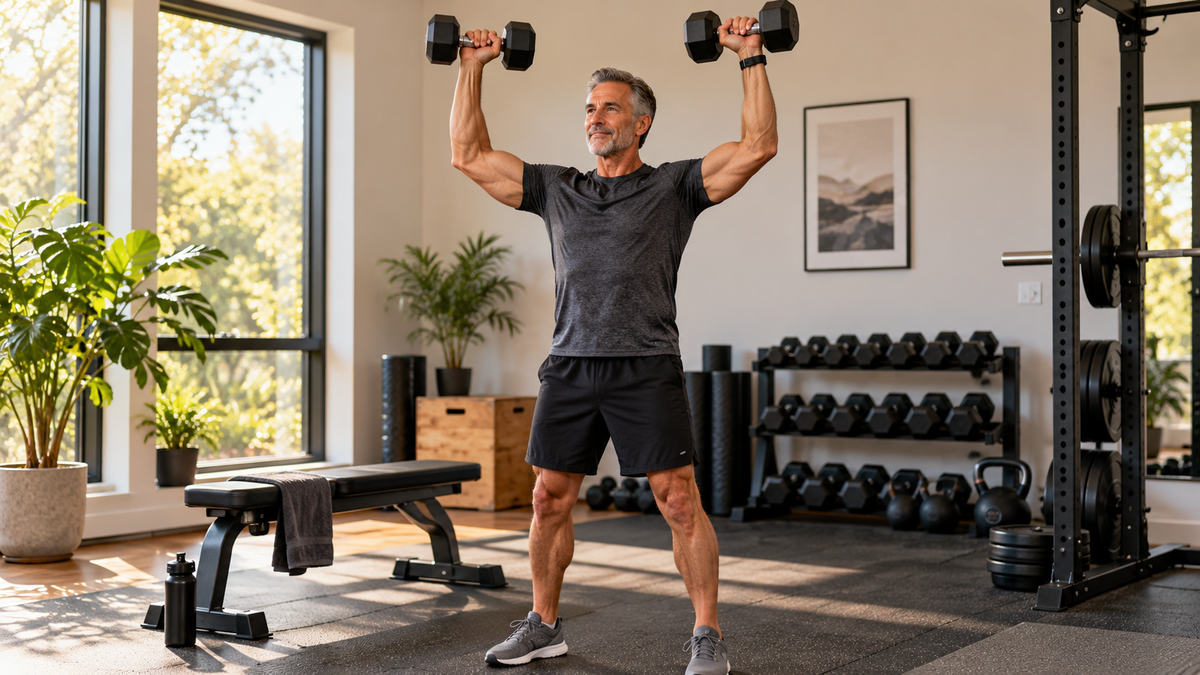
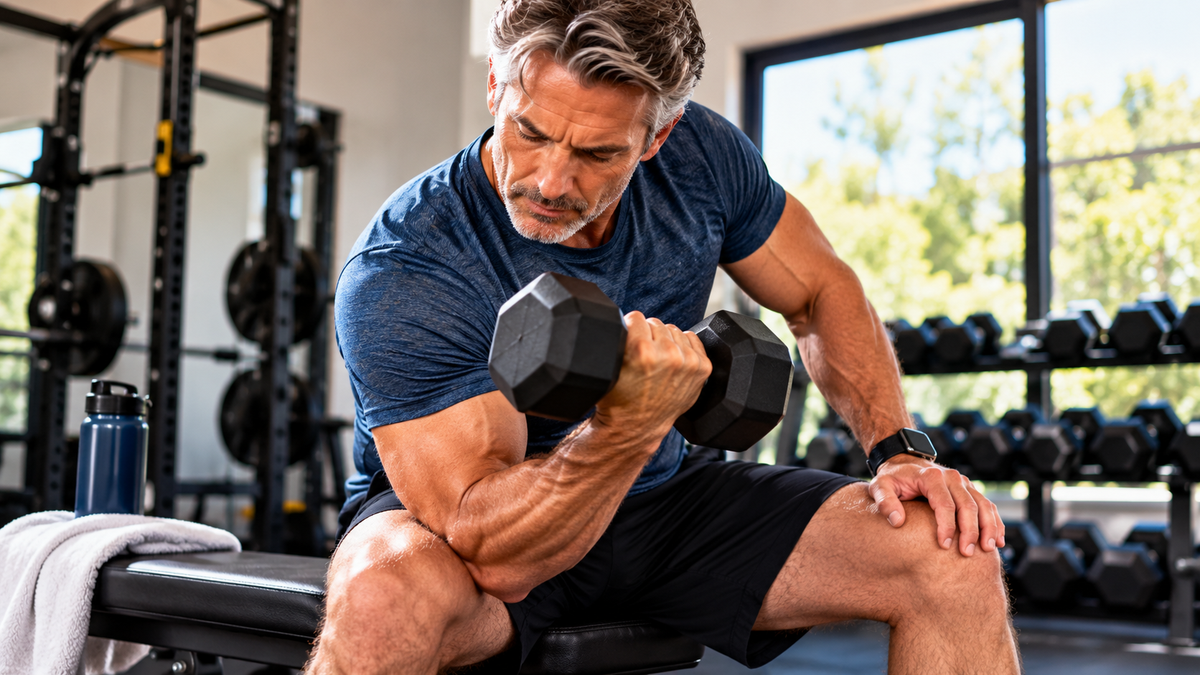
Practical strength can be built using a range of tools:
- dumbbells
- weight machines
- resistance bands
- bodyweight exercises
- simple progressive movements with whatever equipment you have
The goal is not maximum strength competition or stage-ready muscle. It is building enough capacity to make daily life easier and to keep progressing over time.
A straightforward program built around a few basic movements, done consistently, is enough for most adults.
Consistency Matters More Than Extreme Workouts
The strongest, most capable people are rarely the ones who did the single hardest workout. They are the ones who trained consistently for months and years.
A sustainable approach beats an extreme one almost every time. That means training at a frequency you can maintain, progressing gradually, and recovering adequately between sessions.
The boom-and-bust cycle — training intensely for two weeks, then quitting for two months — is one of the most common reasons people fail to build lasting strength.
If you are returning to training after a long break, the same principle applies. Start manageable and rebuild gradually rather than trying to recreate what you did decades ago.
Recovery Still Matters
Strength is not built during the workout. It is built during recovery, when your body adapts to the stimulus you provided.
That means training and recovery are two halves of the same process. Ignoring recovery eventually limits the strength you can build.
Sleep, nutrition, stress, and total weekly workload all influence how well you recover between sessions. As training becomes a consistent part of your life, managing those variables becomes increasingly important.
If you want to understand how recovery can feel different as training stress accumulates, see our guide on why recovery changes after 50.
Nutrition Supports the Training Process
Training gives your body a reason to build strength. Nutrition gives it the resources to actually do it.
The basics that support most training programs include:
- adequate total calories to support activity and recovery
- enough protein across the day to support muscle maintenance and adaptation
- hydration before, during, and after training
- overall dietary consistency rather than perfection
You do not need a complicated nutrition protocol to benefit from strength training. Eating enough, with adequate protein and fluids, covers most of what matters for the majority of adults.
Some people also consider supplements that have a meaningful research base. For example, creatine monohydrate is one of the more studied options that may support strength adaptations when combined with resistance training. It is not required — but it is one of the few supplements with enough evidence to deserve consideration.
How Much Strength Do You Actually Need?
There is no universal number that defines “enough” strength. It depends entirely on what your life demands of you.
For most TrueMontis readers, the useful goal is sufficient strength for:
- daily activities — lifting, carrying, standing, climbing
- work demands, whether physical or sedentary
- recreation and the activities you enjoy
- resilience — having reserve for unexpected physical demands
- continued progression rather than maintaining a fixed standard
Arbitrary strength standards — “you should squat your bodyweight” or “you should bench a certain number” — are not useful targets for most adults. They can be motivating for some, but they are not measures of health or capability on their own.
A better question is whether your current strength supports the life you want to live. If it does, the goal is to maintain it. If it does not, the goal is to build toward it gradually.
A Simple Strength-for-Life Framework
You do not need a complicated program to build practical strength. A simple framework built around major movement patterns covers most of what the body needs.
Train these categories regularly:
- Squat / sit-to-stand — lower-body pushing strength
- Hinge — posterior chain strength (hips, glutes, hamstrings)
- Push — pressing strength (chest, shoulders, triceps)
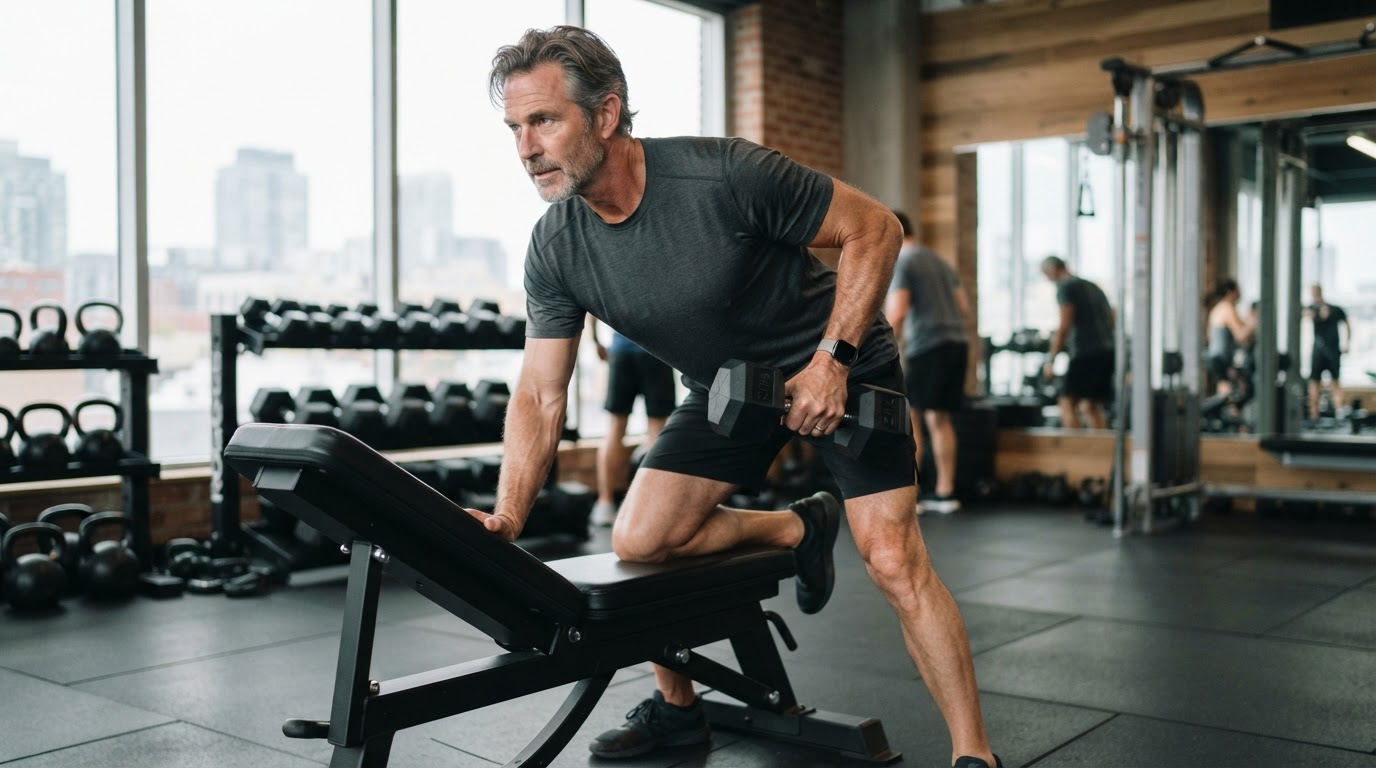
- Pull — pulling strength (back, biceps)
- Carry — total-body strength and stability under load
- Core stabilization — trunk strength for force transfer and balance
Each pattern can be trained with different exercises depending on your equipment, experience, and comfort. A goblet squat, a leg press, and a bodyweight sit-to-stand all train the squat pattern.
This is illustrative guidance, not an individualized training prescription. If you are unsure where to start, consider working with a qualified trainer or consulting a healthcare professional.
What Strength Supports in Everyday Life
Different types of strength contribute to different real-world tasks. This is illustrative, not an individualized prescription.
| Capability | Why Strength Helps | Real-Life Example |
|---|---|---|
| Lower-body strength | Supports standing and climbing | Getting up from a chair / stairs |
| Upper-body strength | Supports pushing and carrying | Groceries / luggage |
| Grip strength | Supports handling objects | Carrying bags / opening containers |
| Core and trunk strength | Supports stability and force transfer | Lifting / changing direction |
| Total-body strength | Supports physical reserve | Work / hobbies / recreation |
TrueMontis Tip
You do not need to be exceptionally strong. The goal is to build enough strength that normal life feels easier, not harder.
When to Get Professional Guidance
Strength training is generally safe and beneficial for most healthy adults. But certain situations call for professional evaluation before continuing or starting a program.
Consider consulting a qualified healthcare professional if you experience:
- persistent or sharp pain during or after exercise
- major orthopedic limitations or recent surgery
- chest pain, pressure, or discomfort
- unexplained dizziness or lightheadedness
- unusual shortness of breath with mild exertion
- significant medical conditions, especially cardiovascular disease
- uncertainty about whether a particular exercise is safe for you
This guide does not diagnose conditions or replace individualized medical advice. When in doubt, speak with a qualified healthcare professional before continuing or changing your training.
Join the TrueMontis Newsletter
Get practical guidance on strength, recovery, mobility, supplements, nutrition, and staying capable after 50.