Creatine for Men Over 50: What to Know Before You Buy

A practical, no-nonsense guide to creatine for men over 50 — what it is, what the research says, how much is commonly used, and what to look for before you buy.

Published September 11, 202612 min read

We may earn a commission from qualifying purchases made through links on this page, at no additional cost to you. Affiliate Disclosure

Creatine isn't just for bodybuilders or twenty-something gym regulars.

For men approaching 50 and beyond, it can be a practical supplement to consider alongside resistance training, adequate protein, recovery, and a consistent exercise routine.

But the supplement aisle makes something relatively simple look complicated: monohydrate, micronized, gummies, capsules, loading phases, pre-workout timing, and proprietary blends.

So what actually matters?

This guide breaks down what creatine does, what the research says for midlife and older adults, how much is commonly used, what to look for when buying it, and which marketing claims you can probably ignore.

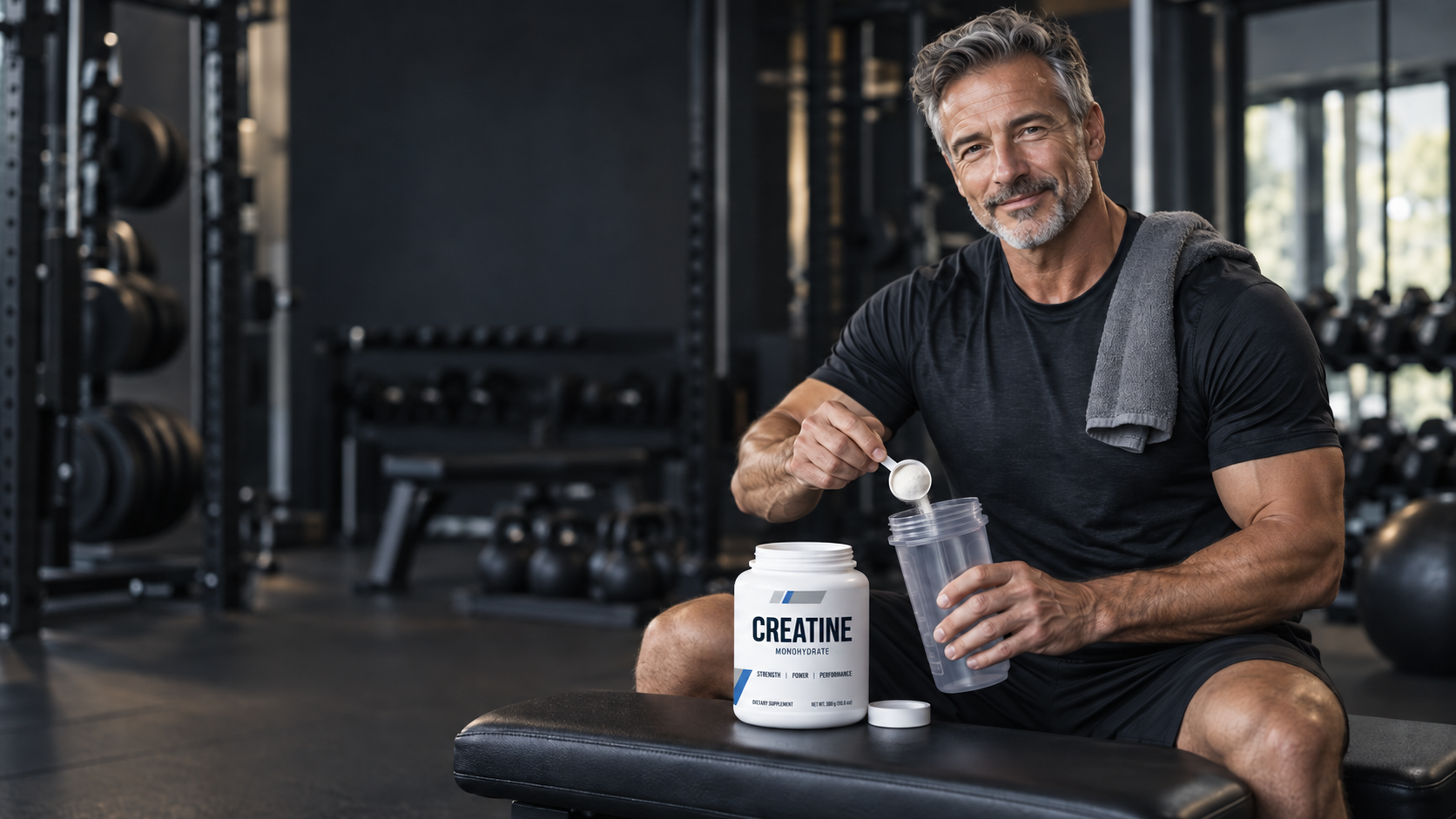
Man over 50 preparing a creatine supplement in a gym after strength training

Man over 50 preparing creatine after a strength-training session.

Key Takeaways

  • Creatine monohydrate is the simplest, most evidence-backed form to consider — there's usually no reason to pay more for exotic blends.
  • A practical daily amount is approximately 3–5 grams; take it consistently rather than obsessing over exact timing.
  • Loading phases are optional — a steady daily maintenance amount works fine and avoids extra complexity.
  • Compare products by price per serving (price ÷ total servings), not by sticker price alone.
  • Creatine supports a good resistance-training program — it doesn't replace training, nutrition, sleep, or medical care.

Our Top Creatine Picks

Three straightforward creatine monohydrate options for different priorities, from value and serving count to third-party certification.

As an Amazon Associate I earn from qualifying purchases. We may earn a commission from qualifying purchases made through links on this page, at no additional cost to you.
Best Value
1/2

Nutricost Creatine Monohydrate

Best for: Value-focused shoppers who want a large 200-serving container.

Why it stands out: Nutricost keeps the formula straightforward: micronized creatine monohydrate with 5 g per serving. The 1 kg container provides 200 servings, making it a practical option for consistent daily use.

  • 5 g creatine monohydrate per serving
  • 200 servings
  • 1 kg container
  • Unflavored micronized powder

Trade-off: The large container may be more product than a first-time creatine user wants to purchase initially.

How to use it

  • Mix a measured serving into water, milk, a lactose-free or plant beverage, or a protein shake.
  • It can also be stirred into yogurt, oatmeal or another moist food if the texture works for you.
  • Daily consistency matters more than exact timing; follow the label and the TrueMontis creatine guide.
Best Large-Container Option
1/2

BodyTech Creatine Monohydrate

Best for: People who want a large supply from an established sports-nutrition brand.

Why it stands out: BodyTech provides 5 g of micronized creatine monohydrate per serving and 181 servings in the selected container.

  • 5 g per serving
  • 181 servings
  • Micronized creatine monohydrate
  • Unflavored powder

Trade-off: It offers fewer servings than the Nutricost container being compared.

How to use it

  • Mix a measured serving into water, milk, a lactose-free or plant beverage, or a protein shake.
  • It can also be stirred into yogurt, oatmeal or another moist food if the texture works for you.
  • Daily consistency matters more than exact timing; follow the label and the TrueMontis creatine guide.
Best for Third-Party Certified Quality
Verified
1/2

Klean Athlete Klean Creatine

Best for: People who prioritize third-party sports certification and product quality controls.

Why it stands out: Klean Creatine provides 5 g of creatine monohydrate per serving and is NSF Certified for Sport.

NSF Certified for Sport: Every batch is independently tested to verify label claims, screen for over 280 banned athletic substances, and test for unsafe levels of heavy metals and contaminants.
  • 5 g creatine monohydrate per serving
  • Approximately 60 servings
  • 315 g container, unflavored
  • NSF Certified for Sport
  • No additional ingredients listed by the manufacturer

Trade-off: The container provides substantially fewer servings than the other two products in this comparison.

How to use it

  • Mix a measured serving into water, milk, a lactose-free or plant beverage, or a protein shake.
  • It can also be stirred into yogurt, oatmeal or another moist food if the texture works for you.
  • Daily consistency matters more than exact timing; follow the label and the TrueMontis creatine guide.
Associated Products

Useful Accessories for Mixing Creatine

Optional tools that can make daily mixing easier. These are accessories, not alternative creatine products.

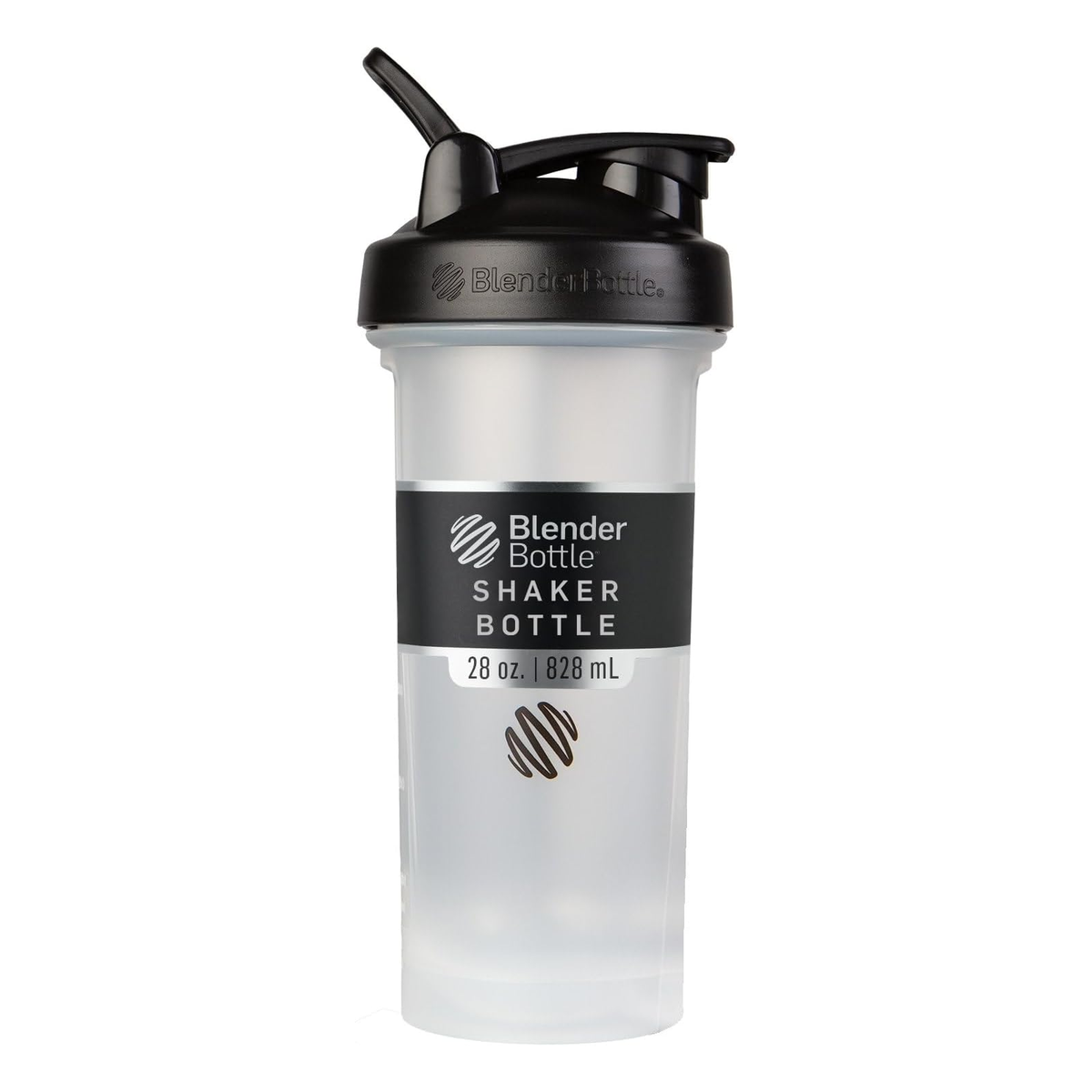
BlenderBottle Classic V2 28 oz shaker bottle

Manual Shaker

BlenderBottle Classic V2 — 28 oz

Best for quickly mixing creatine into water, milk or a protein shake.

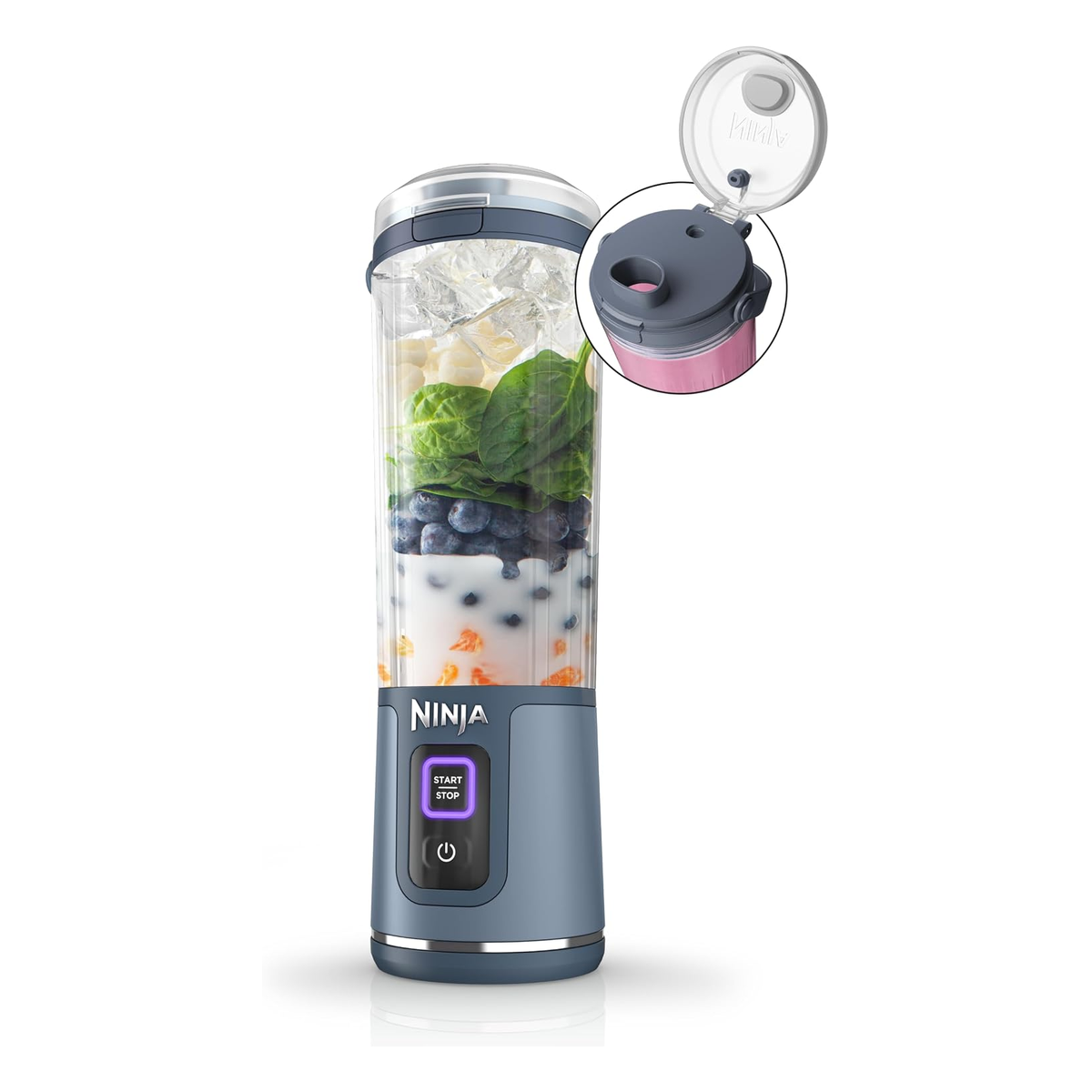
Ninja BC151NV Blast portable blender

Portable Blender

Ninja BC151NV Blast — 18 oz

Best for smoothies or thicker mixes that combine creatine with fruit, oats or protein powder.

Compare Creatine Products

Select two or three products to compare key specifications side by side.

How We Evaluate & Compare

TrueMontis evaluates products using practical, transparent criteria rather than marketing claims. For creatine supplements, we look at:

  • Ingredient form — is it creatine monohydrate?
  • Dose transparency — can you clearly see how much creatine each serving provides?
  • Servings per container — how much usable product are you actually buying?
  • Third-party testing — is there credible independent quality verification?
  • Added ingredients — are they useful, unnecessary, or potentially problematic?
  • Practical fit — does this make sense for a normal man rebuilding strength, or is the product mostly marketing?
  • Price per serving — when verified, is the lower-priced container actually the better value?
TrueMontis Tip

The cheapest container is not always the best value. Compare serving size, total servings, product quality, and verified cost when available.

Buying Guide

Before you buy, a short checklist:

  1. Form: look for creatine monohydrate as the main ingredient.
  2. Serving size: a serving should make it easy to get approximately 3–5 grams.
  3. Servings: compare price per serving, not just sticker price.
  4. Testing: prefer products with reputable third-party certification (e.g. NSF Certified for Sport) when available.
  5. Labeling: avoid proprietary blends that hide how much creatine you're actually getting.
  6. Skip the extras: you generally don't need exotic forms, huge blends, or fancy timing systems.

Then focus most of your attention where it belongs: your training consistency.

Quick Answer

For most healthy adults considering creatine for strength training, creatine monohydrate is the simplest place to start.

It is the most extensively studied form of creatine, and a typical maintenance intake used in research and sports-nutrition guidance is approximately 3–5 grams per day.

You do not need an expensive formula, complicated creatine blend, or mandatory loading phase.

The bigger priorities are:

  • use creatine monohydrate
  • take it consistently
  • choose a reputable product
  • look for independent third-party testing
  • combine it with progressive resistance training
  • maintain adequate nutrition and recovery

Creatine is a supplement to a good training plan — not a substitute for one.

What Is Creatine?

Creatine is a compound naturally produced by the body and also obtained from foods such as meat and seafood.

Most of the creatine in your body is stored in skeletal muscle.

There, it helps support the rapid regeneration of energy used during short, high-intensity efforts.

Think:

  • lifting weights
  • pushing through another repetition
  • sprinting
  • repeated bursts of muscular effort

That's one reason creatine has become one of the most researched sports supplements available.

Supplementation increases the amount of creatine available in muscle, which can help support repeated high-intensity performance.

For someone trying to rebuild strength after 50, that's more relevant than whether a supplement promises to make you feel "energized."

Why Creatine Becomes Interesting After 50

Getting stronger at 50 isn't about training like you're 25. It's about preserving and rebuilding useful strength with a program you can consistently recover from.

As adults age, maintaining muscle and strength becomes increasingly important for everyday function and long-term physical capability.

Creatine becomes interesting because research suggests that when it is combined with resistance training, it may help support improvements in strength and lean tissue.

Recent research in older adults has found that creatine combined with resistance training can produce modest additional improvements in some measures of strength and lean mass.

That's compared with resistance training alone.

That doesn't mean creatine automatically builds muscle.

It means it may help make a properly designed strength program more productive.

That distinction matters.

Does Creatine Actually Help Build Strength?

Creatine is not magic, but it has one major advantage over many supplements:

It has a substantial research base.

Research consistently supports creatine supplementation for improving repeated high-intensity exercise capacity.

Studies combining creatine with resistance training frequently report greater strength adaptations than training alone.

For men over 50, the practical takeaway is straightforward:

If you're doing progressive resistance training, creatine may help support that training.

If you're not exercising, creatine should not be viewed as a replacement for resistance training.

The foundation still looks like this:

  1. Consistent strength training
  2. Progressive overload
  3. Adequate protein and calories
  4. Recovery and sleep
  5. Supplements where they make sense

Creatine belongs near the bottom of that list — but unlike many supplements, it has enough supporting evidence to deserve consideration. Explore more supplement guides on TrueMontis.

Does Creatine Build Muscle by Itself?

Not in the way supplement advertising sometimes implies.

Creatine can increase water stored within muscle, and over time it may help support greater training capacity.

Combined with resistance training, that can contribute to increases in lean mass.

But swallowing a scoop of creatine while remaining sedentary is not the same thing as building stronger muscle through training.

The useful combination is:

Creatine + resistance training + adequate nutrition + consistency

TrueMontis does not view creatine as a shortcut.

We view it as a potential tool that can support a good training system.

What Type of Creatine Should You Buy?

For most people, the answer is remarkably simple:

Creatine Monohydrate

Creatine monohydrate is the form with the deepest research base.

More expensive variations may use names such as:

  • creatine hydrochloride
  • buffered creatine
  • creatine nitrate
  • creatine blends
  • advanced creatine matrices

That does not automatically mean they work better.

For the average person rebuilding strength after 50, there's usually little reason to start with a complicated formula when plain creatine monohydrate already has extensive research behind it.

What About Micronized Creatine?

Micronized creatine monohydrate is still creatine monohydrate. The particles have simply been processed to be smaller, which may improve how easily the powder mixes.

That's a convenience feature — not an entirely different type of creatine.

How Much Creatine Should Men Over 50 Take?

A commonly used maintenance amount is:

3–5 grams per day

That range appears frequently in creatine research and sports-nutrition guidance.

Importantly, creatine is generally used consistently, not only on workout days.

Your individual situation may differ, especially if you have medical conditions or take medications. When in doubt, discuss supplementation with your healthcare professional.

Do You Need a Loading Phase?

No.

A traditional creatine loading protocol uses a larger amount for approximately five to seven days before switching to a smaller daily maintenance amount. The purpose is to increase muscle creatine stores more quickly.

But loading is not mandatory.

Another option is simply to take approximately 3–5 grams daily. Muscle creatine levels increase more gradually, but you avoid the complexity — and for some people, the gastrointestinal discomfort — associated with larger loading doses.

Simple TrueMontis approach

If you're not in a hurry:

Take a consistent daily maintenance amount and skip the complicated loading routine.

Simple is easier to maintain.

When Should You Take Creatine?

You'll see strong opinions online about taking creatine:

  • before training
  • immediately after training
  • with carbohydrates
  • with protein
  • first thing in the morning

Research has not established a compelling reason for most recreational lifters to obsess over exact timing.

Consistency appears far more important than trying to hit a perfect 20-minute window.

A practical approach is to take it at a time you're likely to remember. For example:

  • with breakfast
  • with a post-workout meal
  • mixed into a protein shake
  • with another consistent daily meal

The best schedule is often the one you can follow.

Does Creatine Cause Weight Gain?

It can.

That doesn't necessarily mean fat gain.

Creatine increases water storage within muscle, particularly during the early stages of supplementation. As a result, the number on the scale may increase.

For someone who is overly focused on body weight, this can initially be confusing.

A better question is:

Are you becoming stronger, training more effectively, and improving body composition over time?

A small increase in scale weight from increased muscle water is very different from gaining body fat.

Is Creatine Safe for Your Kidneys?

For healthy adults using recommended amounts, research has generally not found creatine to damage kidney function.

However, this does not mean creatine is appropriate for every person.

Speak with a qualified healthcare professional before using creatine if you:

  • have known kidney disease
  • have liver disease
  • have significant medical conditions
  • take medications that may affect kidney function
  • have been told to limit supplements
  • are undergoing medical testing where creatinine levels are relevant

Creatine supplementation can also affect blood creatinine measurements. If you use creatine and are having kidney-related bloodwork, let your healthcare professional know.

There is no single universal medication-interaction list for creatine, but the decision deserves extra review when you use medicines that affect kidney function, have reduced kidney function, or are being monitored with kidney-related laboratory tests. Bring the exact product and dose to your clinician or pharmacist.

Stop self-supplementing and get medical advice if you develop unexplained swelling, persistent vomiting or diarrhea, markedly reduced urination, severe weakness, or another concerning symptom while using a supplement.

What to Look for Before Buying Creatine

Here's where shopping becomes much easier.

1. Creatine Monohydrate as the Main Ingredient

For a basic creatine product, the ingredient list shouldn't need to read like a chemistry textbook.

A straightforward unflavored product may contain little more than:

Creatine monohydrate

That's often enough.

2. A Practical Serving Size

Look for a serving that makes it easy to get approximately 3–5 grams. For example:

1 scoop = 5 g creatine monohydrate

makes comparison straightforward.

3. Number of Servings

Do not compare containers based only on sticker price. One tub might cost less because it contains fewer servings.

Instead calculate:

Product price ÷ number of servings = price per serving

This is the metric TrueMontis will use when comparing creatine products.

4. Third-Party Testing

Dietary supplements are not pre-approved by the FDA for safety and effectiveness before being sold. That makes independent product testing particularly useful.

Look for reputable third-party certification programs when available. One example is NSF Certified for Sport, which independently evaluates participating products and manufacturers. TrueMontis should confirm a current certification in the certifier's own database before displaying it as verified.

You do not need to be a professional athlete to care about what's actually in your supplement.

5. Transparent Labeling

Be cautious when the amount of creatine is hidden inside a proprietary blend. You should be able to identify how much creatine you're actually getting.

Simple labeling makes product comparison easier.

What You Probably Don't Need to Pay Extra For

Creatine marketing can make a simple supplement unnecessarily expensive. Be cautious about paying significantly more solely for:

Exotic creatine forms

A more complicated chemical name doesn't automatically mean better real-world results.

Huge proprietary blends

If you want creatine, buy creatine. You don't necessarily need it bundled with stimulants, herbs, testosterone-oriented ingredients, or a dozen compounds you weren't shopping for.

"Ultra anabolic" marketing

Creatine can support resistance training. It is not a steroid, hormone, or shortcut to dramatic transformation. To get the most from it, pair it with consistent training and adequate recovery between workouts.

Fancy timing systems

You generally don't need separate morning, pre-workout, and post-workout creatine products. Consistency beats complexity.

Join the TrueMontis Newsletter

Get practical guidance on strength, recovery, mobility, supplements, nutrition, and staying capable after 50.


We respect your privacy. You can unsubscribe at any time. See our Privacy Policy.

Frequently Asked Questions

Final Verdict & Conclusion

For men approaching 50 and beyond who are rebuilding strength, creatine deserves consideration because it is simple, well-researched, and easy to integrate into a consistent training routine.

  • Creatine monohydrate is the simplest evidence-backed form to consider.
  • Approximately 3–5 g per serving is a practical range commonly used.
  • Consistency matters more than obsessing over exact timing.
  • Clear labeling, reputable manufacturing, and third-party testing are useful quality signals.
  • Creatine works best as a support for resistance training, adequate protein, and recovery — not as a replacement for them.

TrueMontis Takeaway

Start simple. Choose a straightforward creatine monohydrate product, take it consistently, and focus most of your attention on the part that matters most: your training consistency.

Medical Note

TrueMontis provides general educational information and is not a substitute for professional medical advice, diagnosis, or treatment. Consult a qualified healthcare professional regarding medical conditions or before beginning a new exercise, nutrition, or supplement program.

Share this guide:
Sources & References

Research Sources

  • International Society of Sports Nutrition. International Society of Sports Nutrition position stand: creatine supplementation and exercise. Journal of the International Society of Sports Nutrition. 2021. Source
  • Devries MC, Phillips SM. Creatine supplementation during resistance training in older adults: a meta-analysis. Sports Medicine. 2014. Source
  • Candow DG, et al.. Effectiveness of creatine supplementation on aging muscle and bone: a systematic review. Nutrients. 2019. Source
  • U.S. National Library of Medicine. Creatine — MedlinePlus. 2023. Source

Product Sources

  • Nutricost. Nutricost Creatine Monohydrate — product label and specifications. 2026. Source
  • BodyTech. BodyTech Creatine Monohydrate Powder — product label and specifications. 2026. Source
  • Klean Athlete. Klean Creatine — product label and NSF Certified for Sport verification. 2026. Source
  • NSF International. NSF Certified for Sport program overview. 2024. Source

The TrueMontis Editorial Approach

TrueMontis publishes practical, research-aware guidance for men rebuilding strength in midlife. This guide focuses on what the research commonly supports and what marketing tends to exaggerate. Recommendations are independent; affiliate relationships never determine what we cover. Always consult a qualified healthcare professional before starting any new supplement.