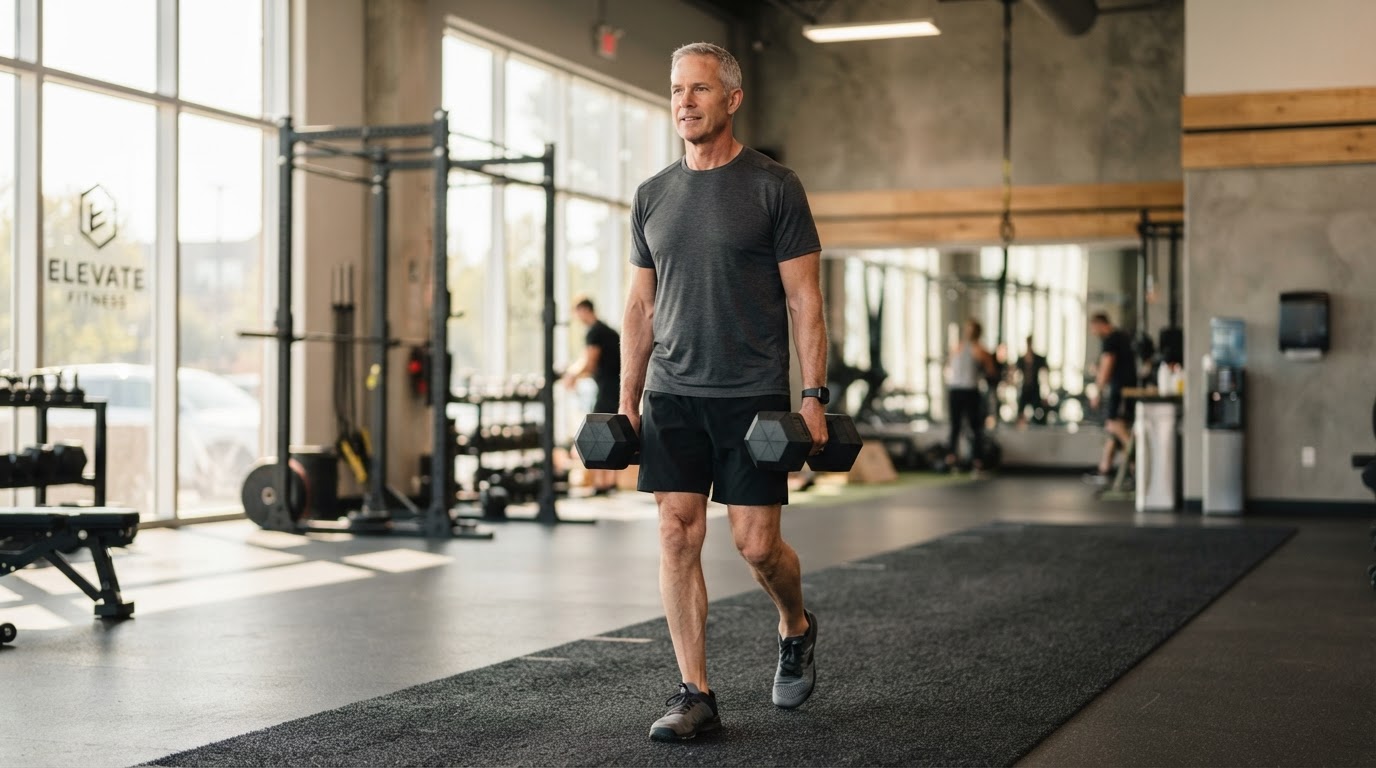
Can You Really Build Muscle After 50?
Yes. Resistance-training studies in older men show meaningful improvements in strength, lean mass and physical function. National Institute on Aging guidance also emphasizes that strength training remains useful well into older age.
The key is not trying to train like your younger self. The key is applying progressive overload at a dose you can recover from.
What Changes With Age — and What Does Not
Age-related muscle loss and anabolic resistance can make preserving and building muscle harder, but muscle still responds to resistance training.
What does not change is the basic requirement: the muscle needs a repeated training stimulus, enough amino acids and enough recovery time to adapt.
Choose a Muscle-Building Strategy by Your Situation
If You Are Completely New to Strength Training
Use two or three full-body sessions and learn the basic movement patterns first.
If You Are Returning After Years Away
Start below your old volume and let strength return before adding more sets.
If You Already Lift Consistently
Track progression, use enough weekly volume to grow and manage fatigue deliberately.
If You Also Want to Lose Fat
Keep the calorie deficit moderate and protect protein and resistance training.
If Your Job Is Physical
Count work stress as part of total workload instead of pretending recovery starts after work.
1. Progressive Resistance Training
Progressive overload means gradually asking the muscles to do more over time. You can add weight, repetitions, sets, range of motion or better control.
The progression does not need to happen every workout. A slow upward trend over months is more important than constant weekly increases.
2. How Often Should Men Over 50 Train for Muscle?
Two or three full-body sessions per week are a strong starting point for many men. More experienced lifters may use three or four sessions if total volume and recovery are managed.
For a detailed schedule, see our strength-training frequency guide.
3. Sets, Reps and Effort
Muscle growth can occur across a broad repetition range when sets are sufficiently challenging. Moderate rep ranges are often practical because they balance load, control and joint comfort.
Most sets do not need to reach absolute failure. Finishing with one to three good repetitions still possible is a reasonable strategy for many recreational lifters.
4. Exercise Selection
Build the program around pushing, pulling, squatting, hinging, carrying and single-leg work. Machines, dumbbells, bands and bodyweight can all be useful.
Choose exercises you can load progressively without repeatedly aggravating joints.
5. Protein for Muscle Growth After 50
Protein supports muscle repair and growth, but more protein is not automatically better. Research in older adults shows that resistance training remains the main driver and that protein supplementation does not always add extra gains when baseline intake is already adequate.
For food-first options, see our high-protein foods guide.
6. Calories and Muscle Gain
Building muscle is easier when energy intake is adequate. You do not need an aggressive “bulk,” but chronic under-eating makes progress harder.
Beginners and returning lifters can sometimes build muscle while losing fat, especially when body fat is higher and training is new again.
7. Recovery Between Sessions
Muscle-building training only works if you recover enough to repeat high-quality sessions. Persistent performance decline, unusual soreness and worsening motivation are signs the workload may be too high.
See our weekly recovery plan.
8. Sleep
Sleep supports recovery and training quality. If you consistently sleep too little, adding another set, supplement or training day is rarely the best first move.
If You Are a Beginner Over 50
Start with two full-body sessions, a small exercise list and conservative effort. Learn the movements, then add repetitions and weight gradually.
If You Are Returning After Years Away
Muscle memory can help strength return quickly, but connective tissue and work capacity may lag behind enthusiasm. Keep the first month deliberately conservative.
Read our restarting strength training guide.
If You Train at Home
Adjustable dumbbells, resistance bands and bodyweight exercises can support meaningful muscle gain when resistance is progressed over time.
Our home strength training guide shows how to structure the setup.
If You Also Want to Lose Fat
Use a moderate calorie deficit and keep strength training as the main muscle-retention signal. Avoid crash dieting while trying to increase training volume.
If You Have a Physical Job
Manual work adds fatigue even when it does not look like structured exercise. Use fewer total gym sets during harder work weeks and place demanding lower-body sessions before lighter workdays when possible.
If You Only Have 30 Minutes
Prioritize compound movements, use supersets that do not compete heavily and limit low-value accessory work. A short repeatable program beats a long program you skip.
If Muscle Gain Has Stalled
Check the basics before adding complexity: are loads or reps progressing, is protein adequate, are calories too low, is sleep poor, and has training volume become either too low or too high?
Do Supplements Matter for Building Muscle After 50?
Supplements are secondary. Creatine has useful evidence for strength and training support, while protein powder is mainly a convenient way to reach protein targets.
See our creatine guide for men over 50.
Realistic Muscle-Building Expectations After 50
Strength can improve within weeks, but visible muscle gain should be judged over months. Beginners and returning lifters often progress faster than experienced trainees.
Use strength, measurements, photos, clothing fit and training performance together rather than relying on a smart scale's muscle estimate.
Common Muscle-Building Mistakes After 50
- copying high-volume bodybuilding programs designed for younger advanced lifters
- changing exercises too often to measure progression
- chasing soreness instead of repeatable overload
- eating too little while expecting fast muscle gain
- adding supplements before improving training consistency
- training through persistent joint pain
- ignoring work stress and sleep when planning weekly volume
When to Get Professional Guidance
Get individualized guidance if you have cardiovascular disease, uncontrolled blood pressure, major joint problems, unexplained weakness, significant balance limitations or a medical condition that changes exercise tolerance.
Join the TrueMontis Newsletter
Get practical guidance on strength, recovery, mobility, supplements, nutrition, and staying capable after 50.