Why Adjustable Dumbbells Make Sense at Home
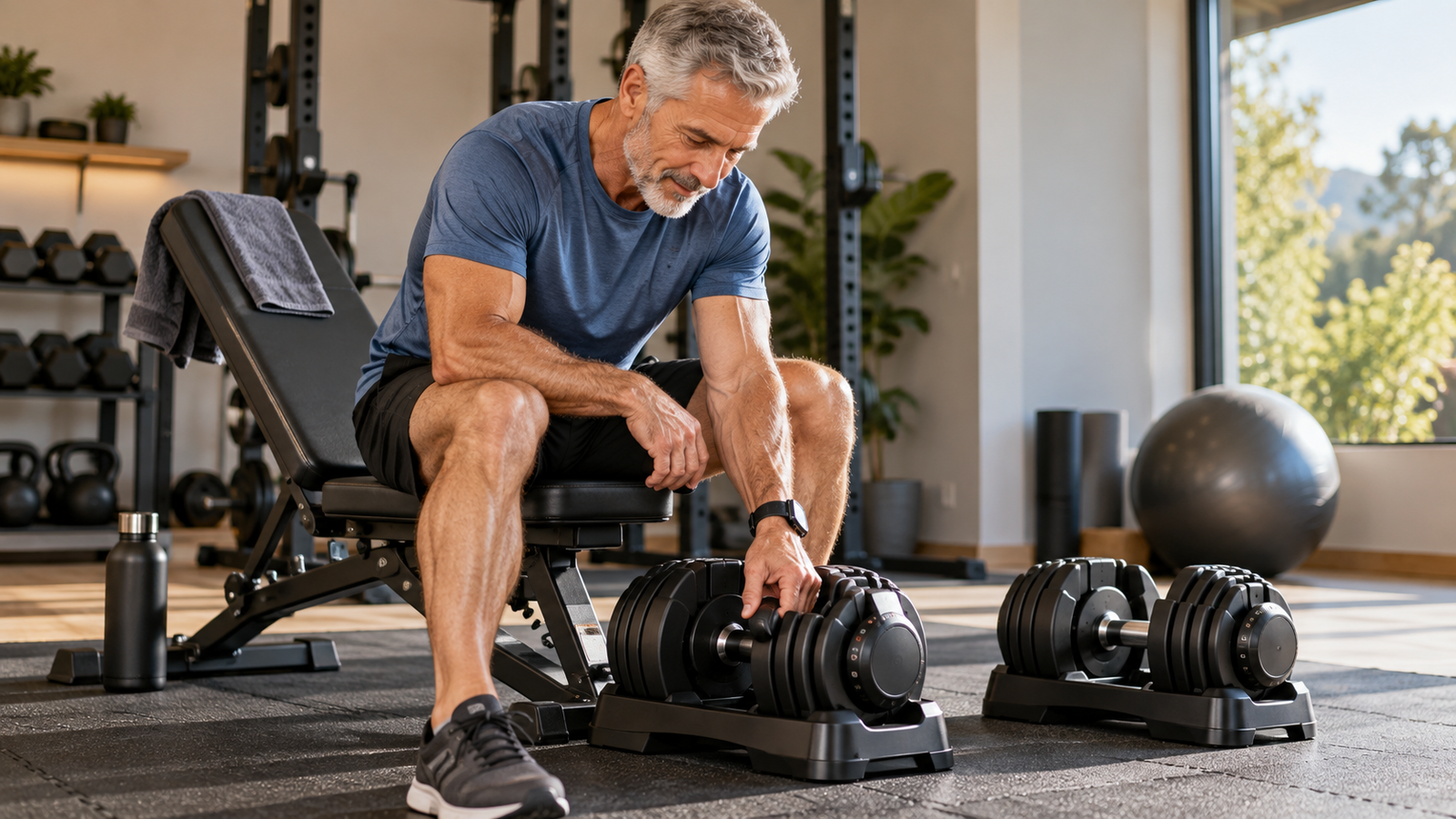
One adjustable pair can replace many fixed dumbbells and dramatically reduce storage needs. That is why current 2026 buying guides repeatedly position them as one of the highest-value purchases for a small or medium home gym.
The tradeoff is complexity. Selector systems add moving parts, while some heavier systems become long or awkward at lighter settings.
Choose Adjustable Dumbbells by Your Situation
If You Are a Beginner
Prioritize a low starting weight, small increments and an easy adjustment mechanism.
If You Are Returning After Years Away
Buy enough range to progress, but do not assume you need the heaviest premium set immediately.
If You Are Already Strong
Top-end load and expandability matter more because rows, presses and split squats can outgrow lighter sets quickly.
If You Live in a Small Apartment
Compare total footprint including the tray or stand, not just the dumbbell body.
If Hand Comfort Matters
Handle diameter, knurling and how your wrist sits inside the dumbbell matter more than marketing claims.
1. Weight Range
The low end matters for lateral raises, curls, rehab-style work and warm-ups. The high end matters for rows, presses, carries and lower-body exercises.
Buy enough ceiling for the next several years, not just your current strength.
2. Weight Increments
Smaller increments make progressive overload easier. A five-pound jump per hand can be large on a shoulder press or lateral raise even when it feels trivial on a row.
Current buying guides repeatedly identify increment size as one of the most overlooked specs.
3. Adjustment Mechanism
Dial Systems
Fast and intuitive, especially when changing weight frequently.
Pin or Block Systems
Often compact and fast, with a different feel from traditional dumbbells.
Plate-Loaded / Locking Systems
Usually slower to change but mechanically simple and often attractive to buyers who prioritize durability.
4. Handle and Grip Comfort
Grip diameter, texture and handle shape affect every repetition. A handle that feels fine for a curl may feel awkward during heavy carries or pressing.
If possible, test the handle before buying or choose a retailer with a practical return policy.
5. Dumbbell Length and Shape
Some adjustable dumbbells stay the same length at every setting. Others become shorter as weight decreases. Long handles or shells can interfere with curls, presses and goblet squats.
6. Durability and Drop Tolerance
Selectorized dumbbells are not always designed to be dropped. Repeated impact can damage plates, locking systems or cradles.
If you routinely train to the point where you need to dump weights, durability should carry more weight in the buying decision.
7. Stand or Floor Storage
A stand is optional, but it can reduce repeated bending and make heavier sets easier to load. For some men over 50, that convenience matters more than another premium feature.
8. Footprint and Storage
Measure the tray or stand footprint before buying. A set can be called “compact” while still occupying more floor space than expected once the base is included.
9. Budget and Value
Paying more can buy better materials, faster adjustments, heavier capacity or a better warranty. It does not automatically make the set more useful for your program.
Spend first on the feature that solves your actual limitation: space, load, speed or durability.
Best Adjustable Dumbbell Setup for Beginners Over 50
Prioritize a low starting weight, small increments, easy adjustment and a moderate top-end. A simpler set you use consistently is better than a heavy premium system that feels awkward.
Best Setup for Returning Lifters
Look for enough top-end range to avoid replacing the set quickly. Your strength may return faster than expected once training becomes consistent again.
Best Setup for Stronger Lifters
Heavier top-end capacity, expandability and durable construction matter more. Check whether the dumbbell length becomes awkward at heavy settings.
Best Setup for Small Apartments
Compact block-style systems and sets with small trays can work well. Measure both storage space and the clear training area required for lunges, presses and floor work.
If Grip or Hand Comfort Matters
Look for manageable handle diameter, comfortable texture and easy selectors. Avoid assuming a more aggressive knurl is automatically safer or better.
If You Use Supersets or Fast Weight Changes
Adjustment speed matters more when you frequently move from one exercise to another with little rest. Dial and selector systems can save time compared with manually loading plates.
Do You Also Need a Bench?
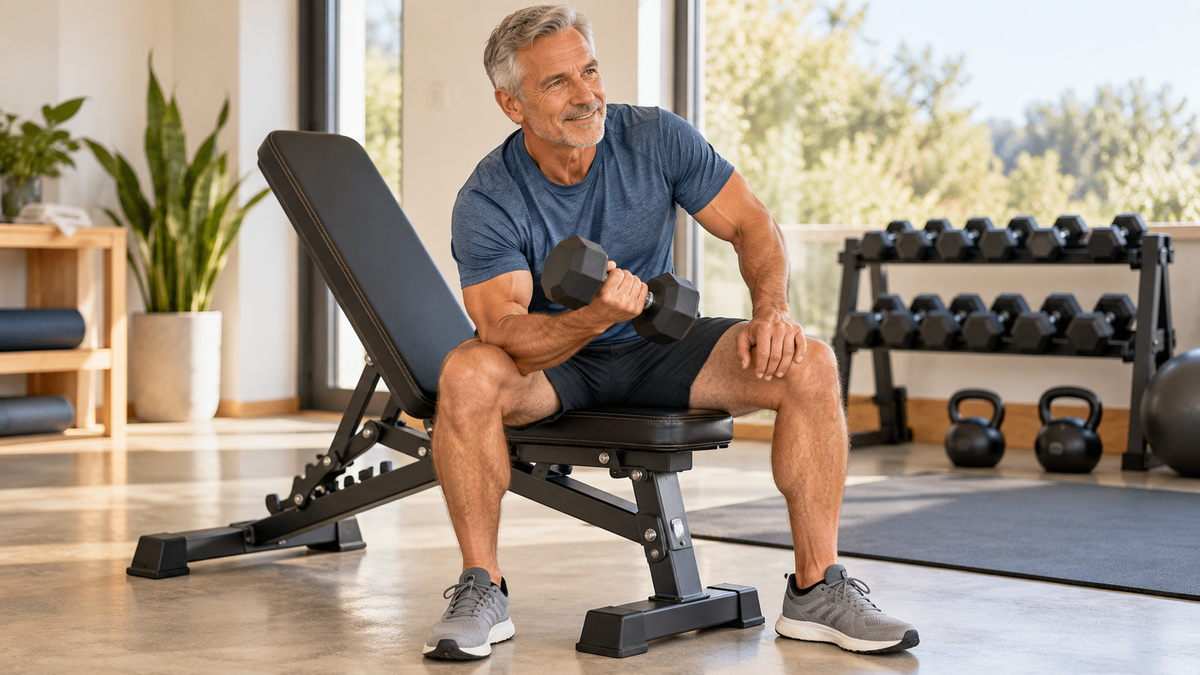
A bench expands dumbbell training substantially with presses, supported rows, split squats and step-ups. It is often the next equipment purchase after the dumbbells themselves.
For exercise ideas, see our dumbbell exercise guide.
Where Future Product Comparisons Will Fit
This guide establishes the buying framework. Specific product comparisons can later be added using the same criteria: weight range, increments, adjustment mechanism, handle comfort, length, durability, footprint, warranty and delivered price.
Adjustable Dumbbell Red Flags
- unclear weight range per dumbbell
- large jumps between settings with no intermediate options
- no published warranty or replacement-part information
- marketing that encourages dropping selectorized dumbbells
- long fixed-length designs that may interfere with normal movements
- no clear return policy on an expensive purchase
Common Adjustable Dumbbell Buying Mistakes
- buying a set you will outgrow quickly
- focusing only on maximum weight
- ignoring increment size
- forgetting to measure the tray or stand
- assuming every selectorized dumbbell can tolerate drops
- buying premium features you do not use
Join the TrueMontis Newsletter
Get practical guidance on strength, recovery, mobility, supplements, nutrition, and staying capable after 50.