Why Dumbbells Work Well for Men Over 50
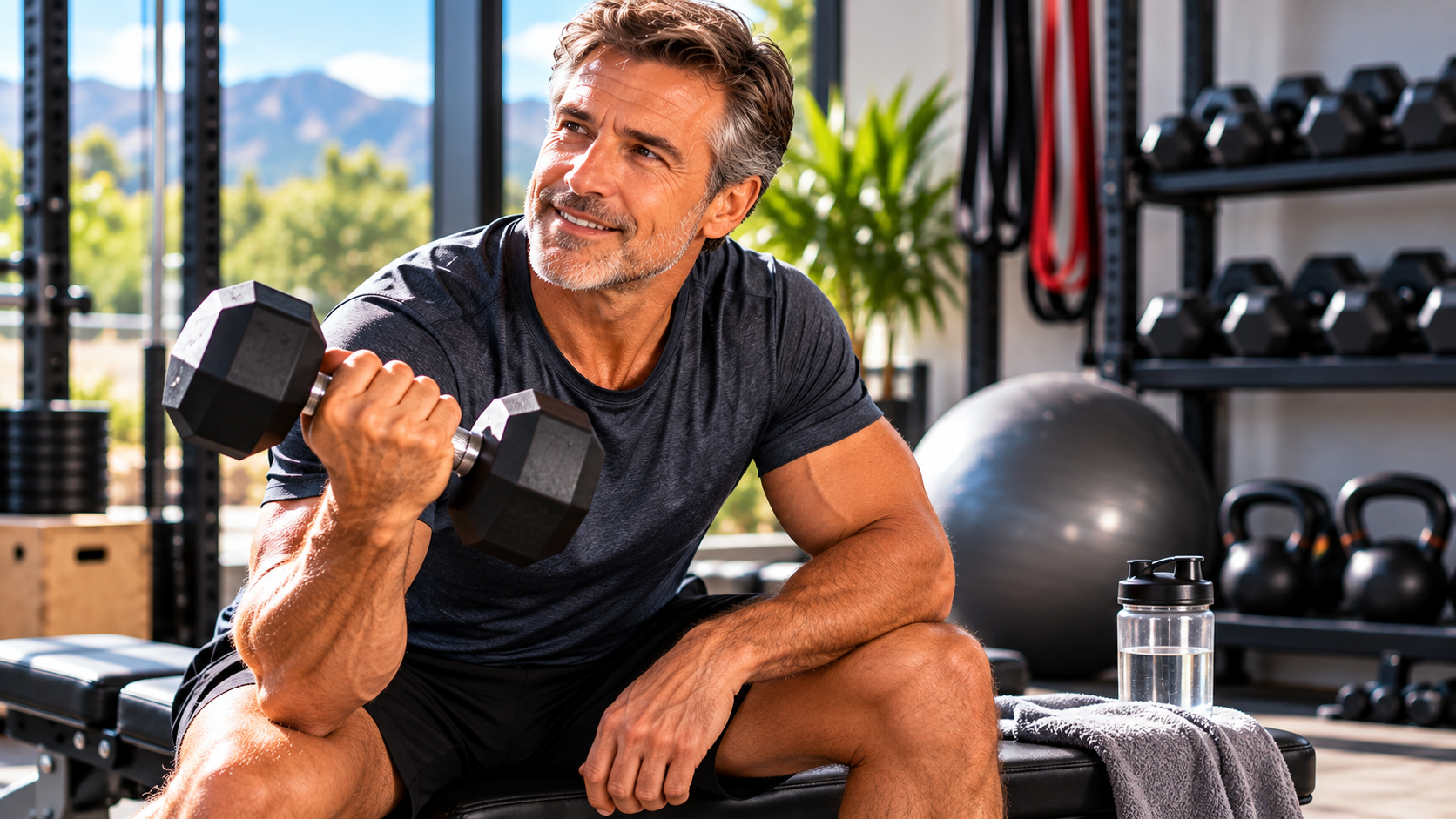
Dumbbells are useful because they are simple, scalable and flexible. The National Institute on Aging notes that strength training can use dumbbells, ankle weights, machines or body weight, and that progressive increases in resistance, sets or repetitions can make muscles stronger.
For a man who trains at home, dumbbells remove many barriers: no commute, no waiting for equipment and no need to learn a large collection of machines. For a gym member, they remain useful because they allow each side of the body to work independently and can be adjusted across a wide range of movements.
How to Choose the Right Dumbbell Exercises After 50
Age alone should not decide your exercise list. Choose movements based on what you can perform with control, the equipment available, and whether the exercise trains a useful movement pattern.
A balanced dumbbell routine should usually include:
- a squat or sit-to-stand pattern
- a hip hinge
- a horizontal pull
- a horizontal push
- a vertical push when comfortable
- a single-leg or step-up pattern
- a carry or grip-focused movement
This follows the same practical framework used in our complete strength training after 50 guide.
1. Goblet Squat or Chair Squat
The goblet squat trains the thighs, hips and trunk while keeping the dumbbell close to the body. Hold one dumbbell vertically at chest level and squat to a depth you can control.
If balance, confidence or depth is limiting, place a sturdy chair or bench behind you and use it as a target. A sit-to-stand with a dumbbell held at the chest can be a useful bridge toward a free-standing goblet squat.
Useful for: beginners, home training, leg strength and everyday tasks such as standing from a chair.
2. Dumbbell Romanian Deadlift
The Romanian deadlift trains the hip-hinge pattern and loads the glutes, hamstrings and back musculature. Hold the dumbbells close to your legs, soften the knees and move the hips backward while keeping the weights close to the body.
The goal is not to touch the dumbbells to the floor. Stop when you reach the range you can control without losing your trunk position, then stand by driving the hips forward.
Useful for: posterior-chain strength, learning to hinge and building the capacity used when picking objects up from lower positions.
3. One-Arm Dumbbell Row
A one-arm row trains the upper back and arms and can be performed with one hand supported on a bench, chair or other stable surface. That support can make it easier to focus on the pulling motion without turning the exercise into a balance test.
Pull the dumbbell toward your hip or lower ribs, pause briefly, and lower it under control. Avoid twisting your torso just to move a heavier weight.
Useful for: upper-back strength, posture-related musculature and balancing the pressing exercises in a dumbbell program.
4. Dumbbell Floor Press
The floor press trains the chest, triceps and front of the shoulders without requiring a bench. Lie on the floor with the dumbbells near your chest, press upward and lower until your upper arms gently contact the floor.
The floor limits the bottom range, which some people find more comfortable than a deep dumbbell bench press. If getting down to and up from the floor is difficult, use a bench press variation or another pressing movement that fits your current ability.
Useful for: home workouts and men who want a horizontal pressing movement without buying a bench.
5. Dumbbell Overhead Press
The overhead press develops shoulder and triceps strength. It can be performed standing or seated, using one or two dumbbells.
Overhead pressing is not mandatory. If you cannot raise your arms comfortably overhead or the movement produces persistent pain, choose a pain-free pressing variation instead and get qualified guidance if the limitation is significant.
Useful for: overhead strength and a simple vertical-push pattern when the shoulders tolerate it well.
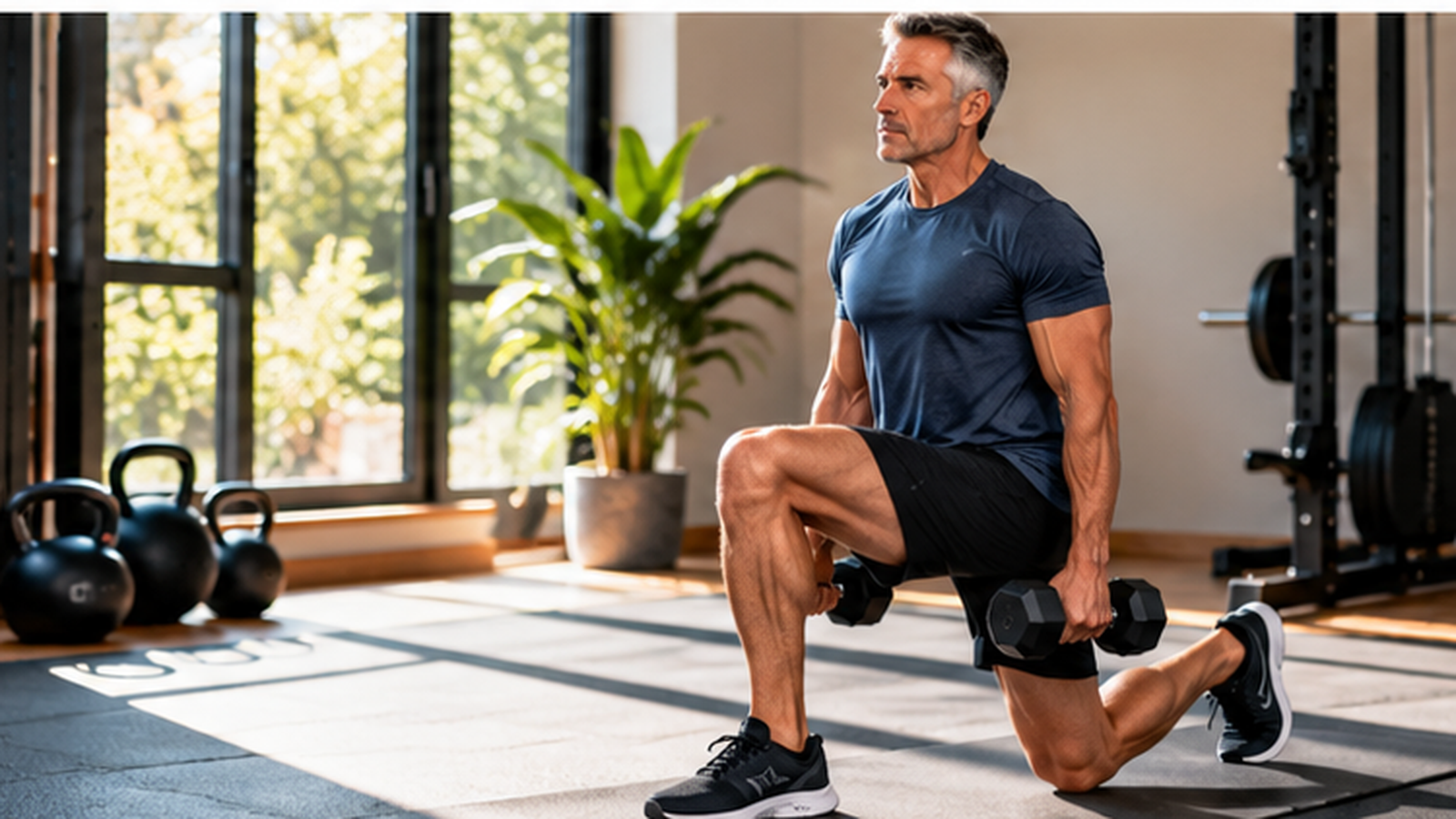
6. Step-Up or Supported Split Squat
Single-leg exercises expose each leg to more work without requiring extremely heavy dumbbells. A low step-up or a supported split squat can both work.
Keep a hand near a stable support if balance is the limiting factor. Start with body weight if needed, then add one or two dumbbells after the movement feels controlled.
Useful for: stairs, single-leg strength, balance demands and making lighter dumbbells more challenging.
7. Farmer Carry
Hold a dumbbell in each hand and walk with controlled steps and an upright posture. It is simple, but it trains grip, trunk stability and the ability to carry load while moving.
If space is limited, walk short lengths back and forth. A suitcase carry — one dumbbell on one side — increases the trunk-stability demand but usually requires a lighter load.
Useful for: grip, carrying groceries, trunk control and practical loaded movement.
Optional Arm and Core Exercises
Biceps curls, triceps extensions, lateral raises and simple core exercises can be added after the main movements if you enjoy them or have a specific reason to train them.
They are accessories, not the foundation. If you have only 30 minutes, prioritize the larger movement patterns first.
Beginner Dumbbell Workout for Men Over 50
A simple starting session could look like this:
- Goblet squat or chair squat — 2 sets
- Dumbbell Romanian deadlift — 2 sets
- One-arm dumbbell row — 2 sets per side
- Dumbbell floor press — 2 sets
- Farmer carry — 2 or 3 short carries
Use controlled repetitions and stop each set while you still feel you could perform a few more clean repetitions. You do not need to train to failure as a beginner.
After several weeks, add a third set, more repetitions, or a small amount of weight where progress has become easy.
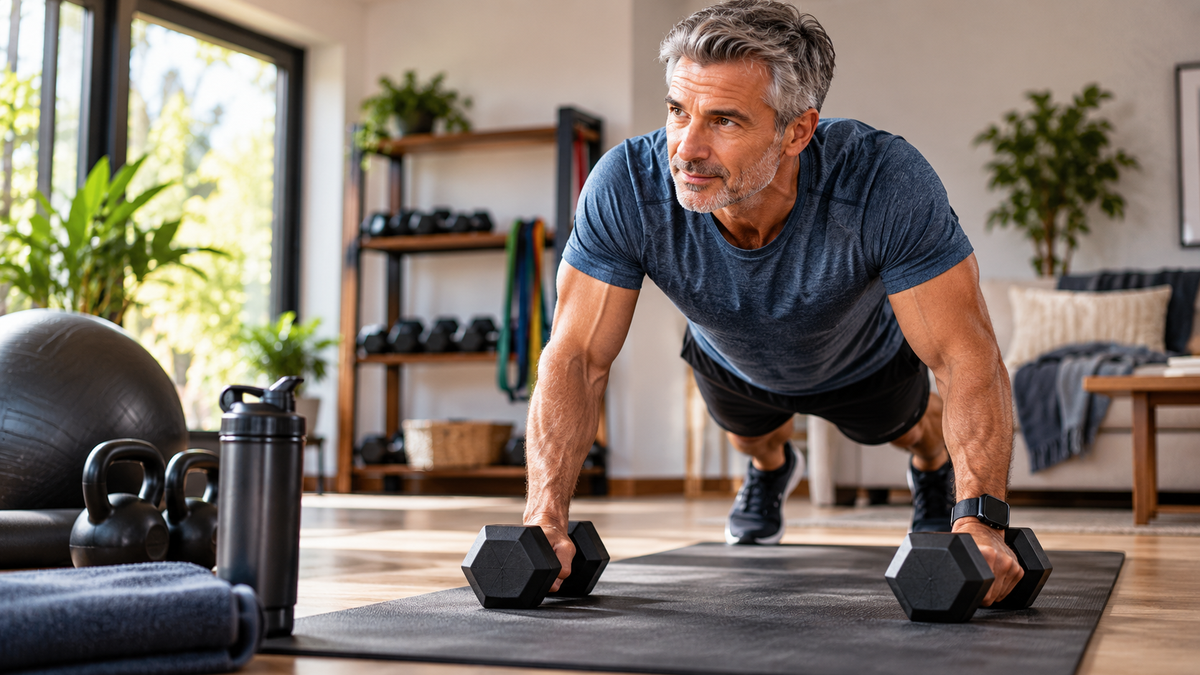
Dumbbell Exercises for Men Over 50 at Home
A home workout can use the same movements. The main limitation is usually weight selection, not exercise selection.
If you own only one light pair of dumbbells, single-leg exercises, slower repetitions and higher repetition ranges can extend their usefulness. Adjustable dumbbells make progression easier because a Romanian deadlift or row will usually require more resistance than a shoulder exercise.
Our home strength-training equipment guide explains when additional equipment is worth considering. If dumbbells are the specific purchase, compare adjustment systems, range and storage in our adjustable dumbbell buying guide.
How Heavy Should Dumbbells Be for a Man Over 50?
There is no age-based dumbbell weight that works for everyone. A useful weight is one that makes the set challenging while allowing you to maintain control and the intended range of motion.
You will also need different loads for different exercises. Your legs and back may handle substantially more resistance than your shoulders or arms.
If you finish every set knowing you could have performed ten more repetitions, the load is probably too light for continued strength progress. If technique breaks down immediately, it is too heavy for that exercise right now.
Sets, Reps and Progressive Overload
A beginner does not need a complicated loading formula. Start with one or two sets of controlled repetitions and build toward more work as the exercises become familiar.
You can progress by:
- adding one or two repetitions
- adding a small amount of weight
- adding a set
- improving range of motion or control
- moving to a harder variation when appropriate
Change one variable at a time. Progressive overload should make the exercise gradually harder, not turn every session into a test.
What If Your Knees, Back or Shoulders Limit Certain Exercises?
Do not assume that being over 50 means pain is normal or that every exercise must be tolerated. Exercise selection can be modified.
If Squats Bother Your Knees
Reduce the depth, use a chair target, try a supported split squat, or use another comfortable lower-body pattern. Persistent or worsening knee pain deserves evaluation.
If Hip Hinges Bother Your Back
Reduce the load and range, work on the hinge pattern without weights, or use another posterior-chain exercise. Pain that radiates, causes weakness or persists should not be trained through.
If Overhead Pressing Bothers Your Shoulders
Skip it. Use a floor press, incline press or another comfortable pressing variation instead. There is no rule that every good dumbbell program must contain overhead pressing.
The goal is to train movement patterns productively, not force one named exercise into every program.
How Often Should Men Over 50 Do a Dumbbell Workout?
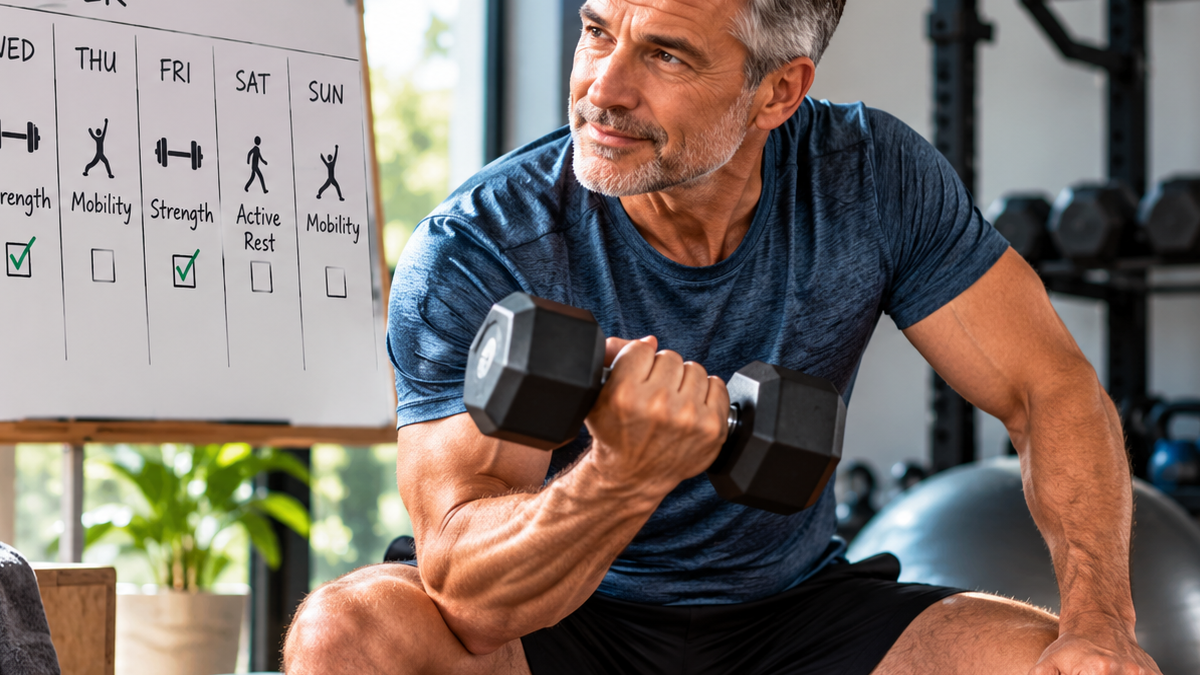
For many beginners, two full-body dumbbell sessions per week is enough to start. Three can also work once recovery and technique are stable.
If you want a detailed comparison of two, three and four training days, see How Often Should Men Over 50 Strength Train?.
Common Dumbbell Training Mistakes After 50
- using the same light dumbbells forever without progressing
- choosing too many isolation exercises and skipping major movement patterns
- rushing repetitions just to finish the set
- training through persistent joint pain
- adding exercises before mastering the ones already in the program
- trying to copy the weights you used years ago on your first week back
- ignoring sleep and recovery while increasing training volume
If you are returning after a long break, our restarting strength training after 50 guide is a better starting point than trying to recreate an old routine immediately.
When to Get Professional Guidance
Get individualized guidance if you have a recent surgery or injury, significant balance limitations, persistent joint or back pain, unexplained symptoms with exercise, or a medical condition that affects exercise tolerance.
A qualified exercise professional can also help if you are unsure how to perform a movement or select an appropriate starting load.
Join the TrueMontis Newsletter
Get practical guidance on strength, recovery, mobility, supplements, nutrition, and staying capable after 50.