What 'Bad Knees' Actually Means
“Bad knees” is not a diagnosis. It can describe osteoarthritis, old injuries, stiffness, pain during stairs or squats, or a knee that simply tolerates less range and load than it used to.
That distinction matters because the right training strategy depends on the underlying problem, symptom pattern and movements that are actually provocative.
Can Strength Training Help Knee Pain?
Yes, in many cases. Strengthening the muscles around the knee and hip can improve physical function and reduce symptoms in people with knee osteoarthritis.
The goal is not to force painful movement. It is to build capacity through tolerable exercises that can be progressed over time.
What Current Guidelines Say
Major clinical guidelines strongly recommend exercise for knee osteoarthritis. Strength, aerobic and neuromuscular exercise can all have a role depending on the person.
Choose the Approach That Fits Your Situation
If You Are a Beginner
Use stable movements, lower volume and conservative effort.
If You Are Returning After Years Away
Start below old loads and avoid using your previous squat depth as the current standard.
If You Have a Physical Job
Reduce lower-body gym volume during demanding workweeks.
If Knee Pain Is Mostly on Stairs or Deep Bends
Use shallower ranges initially and progress depth gradually.
Knee-Friendly Squat Patterns
Goblet squats, box squats and sit-to-stands are useful because range and load are easy to control. A higher box or bench reduces knee flexion and can be lowered gradually over time.
Step-Ups and Sit-to-Stand Variations
Low step-ups and controlled sit-to-stands are practical options because the range is easy to scale. Start with a lower step or higher seat when symptoms are sensitive.
Leg Press: Useful When Range Is Controlled
The leg press provides external stability and lets you adjust foot position and depth. Stop the descent before the knee reaches a range that consistently aggravates symptoms.
Hip Hinges to Train Around Knee Irritation
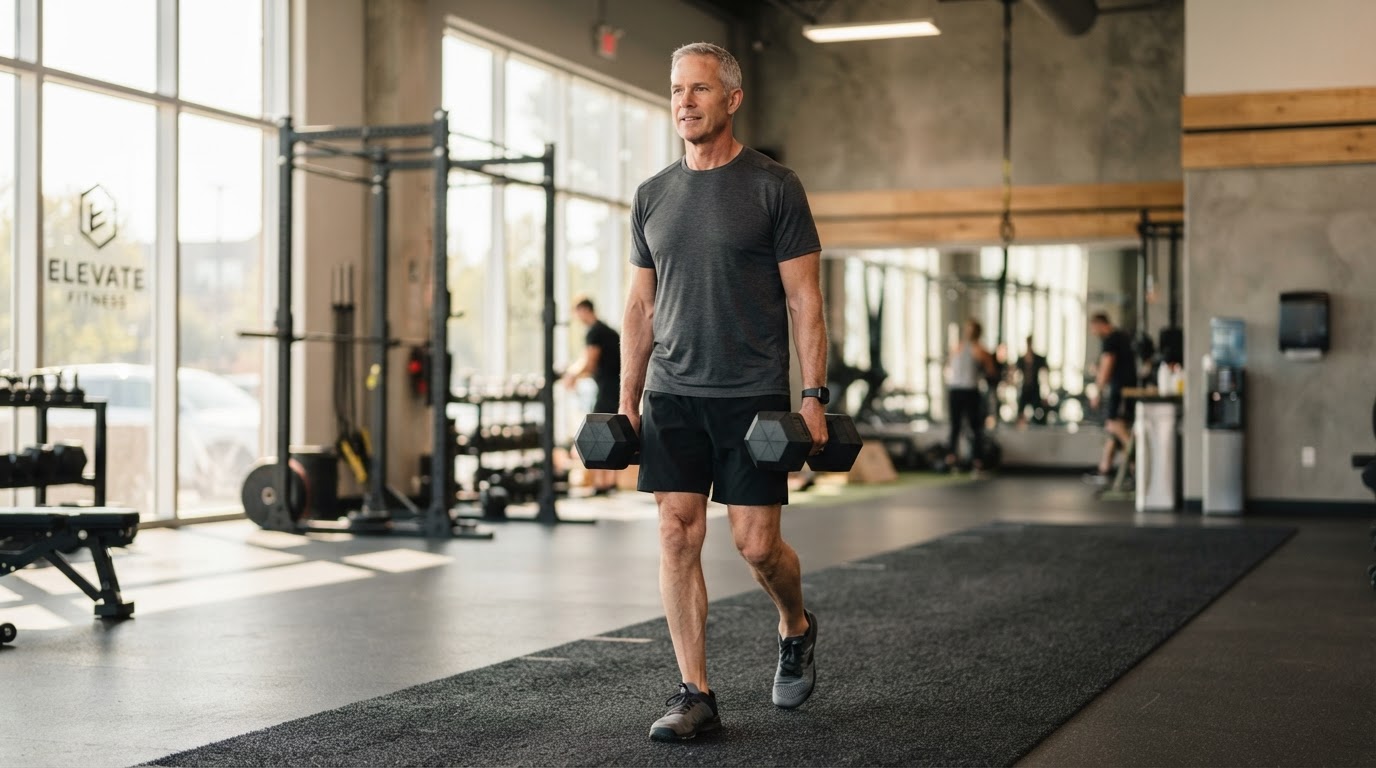
Romanian deadlifts, hip hinges and trap-bar variations can train the posterior chain with less knee flexion than squat-dominant movements.
Hamstrings and Glutes Matter Too
Strong glutes and hamstrings help distribute lower-body work. Glute bridges, hip thrusts and hamstring curls can maintain lower-body strength when knee-dominant exercises are limited.
When Machines Make Sense
Machines are not inferior. They can provide stability, predictable movement paths and easy load adjustments, which is useful when balance or joint confidence is limited.
Resistance Bands and Home Training
Bands can work well for assisted sit-to-stands, terminal knee extensions, rows, hinges and upper-body training. They are especially useful when you need a lower-load home option.
How to Adjust Range of Motion
Range of motion is a training variable. Start in a range that feels tolerable and expand it gradually as symptoms and control improve.
How Heavy Should You Lift?
Use a load that makes the target reps challenging without causing a meaningful symptom flare. You do not need to lift maximally for lower-body training to be effective.
See our guide to choosing the right lifting weight after 50.
How to Monitor Knee Symptoms
Mild stable discomfort can sometimes be acceptable, but symptoms should not keep escalating during the session or remain noticeably worse for days afterward.
Reduce load, range or volume if each session leaves the knee more irritated than the last.
Beginner Version
Use two lower-body movements per session, one to two working sets each, and keep several repetitions in reserve while learning how your knees respond.
Returning-Lifter Version
Rebuild from your current tolerance instead of your old numbers. Our first 30 days back plan gives a conservative return structure.
If You Have a Physical Job
Standing, climbing, kneeling and lifting at work all add knee load. Reduce lower-body gym volume first when work demands rise.
If Body Weight Is Adding to Knee Load
Lower-body strength training still matters. If weight loss is also a goal, combine resistance training with a sustainable nutrition strategy rather than replacing strength work with only cardio.
Home-Workout Version
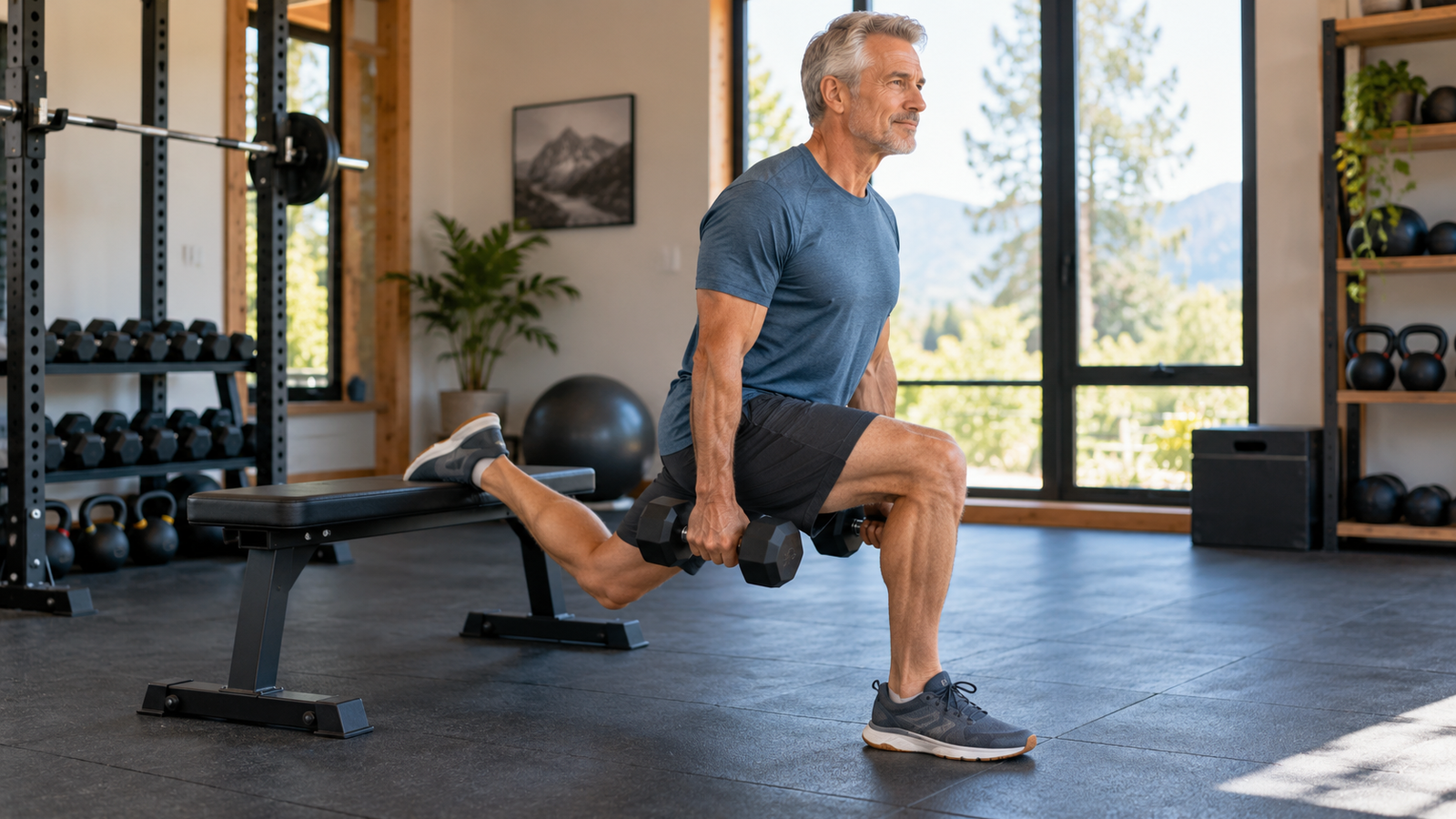
Use sit-to-stands, supported split squats, low step-ups, dumbbell Romanian deadlifts, glute bridges and band work.
Walking, Cycling and Cardio
Walking and cycling are both useful options. Cycling often allows aerobic work with less impact, while walking is valuable for daily function. Use whichever is more tolerable.
What to Avoid
- forcing deeper range because you think it is mandatory
- jumping load quickly after a symptom-free session
- training through swelling, locking or instability
- using pain as proof that the exercise is working
- stopping all lower-body training without trying reasonable modifications
Sample Knee-Friendly Strength Workout
- Box squat or sit-to-stand: 2 sets of 8–10
- Dumbbell Romanian deadlift: 2–3 sets of 8–10
- Low step-up: 2 sets of 8 per side
- Glute bridge: 2–3 sets of 10–15
- Calf raise: 2 sets of 10–15
When to Get Professional Guidance
Seek evaluation for significant swelling, locking, giving way, recent trauma, inability to bear weight, fever or redness, or pain that keeps worsening despite reasonable exercise changes.
Join the TrueMontis Newsletter
Get practical guidance on strength, recovery, mobility, supplements, nutrition, and staying capable after 50.