What Makes an Exercise Compound?
A compound exercise trains multiple joints and muscle groups in the same movement. Squats, rows, presses, hinges and carries are common examples.
Why Compound Movements Matter After 50
Compound movements are efficient. They let you train strength, muscle and coordination with fewer exercises, which is valuable when time or recovery is limited.
Choose Exercises by Your Situation
If You Are a Beginner
Use stable versions such as goblet squats, machine presses and chest-supported rows.
If You Are Returning After Years Away
Use familiar patterns but lighter loads and simpler variations.
If You Train at Home
Dumbbells, bands and bodyweight can cover all major compound patterns.
If You Have a Physical Job
Prioritize quality over volume and avoid duplicating excessive lower-body fatigue.
1. Squat Pattern
Goblet squats, box squats and leg presses all train the squat pattern. Choose the version that lets you use a comfortable range and progress without repeated joint irritation.
2. Hip Hinge
Romanian deadlifts, trap-bar deadlifts and cable pull-throughs train the hips and posterior chain. The hinge is valuable for glutes, hamstrings and lifting strength.
3. Horizontal Push
Dumbbell bench presses, push-ups and machine chest presses train the chest, shoulders and triceps with different stability demands.
4. Vertical Push
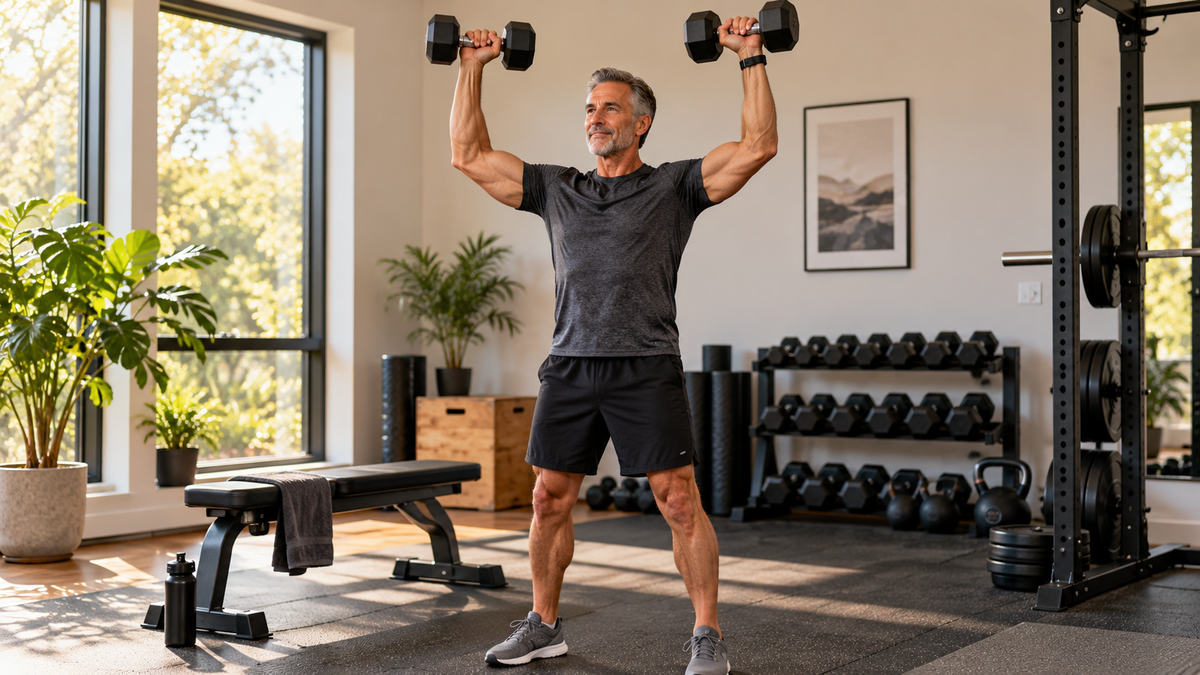
Dumbbell overhead presses and landmine presses are useful options. Landmine presses can be especially comfortable for men who dislike a fully overhead position.
5. Horizontal Pull
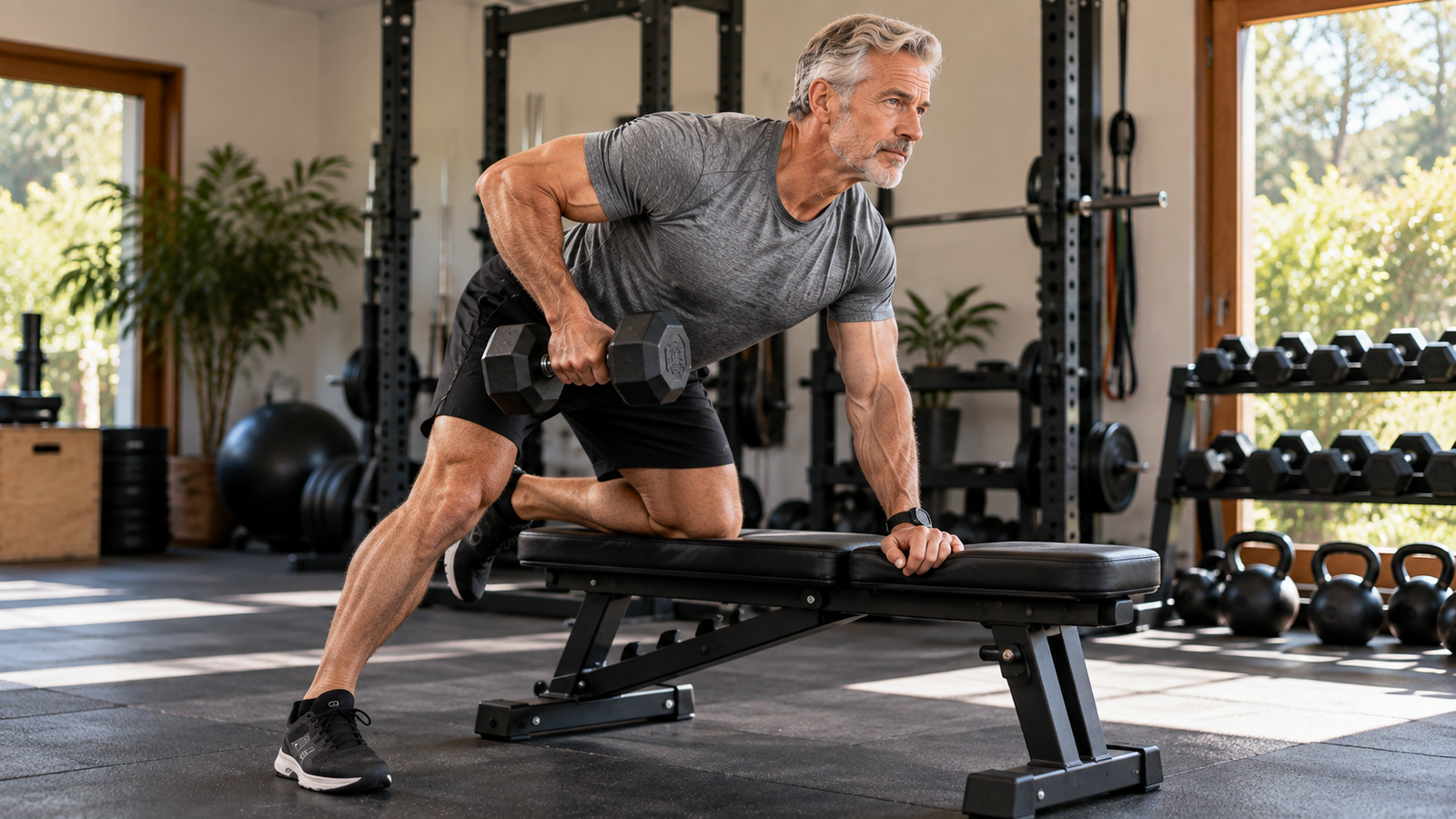
One-arm dumbbell rows, cable rows and chest-supported rows train the upper back and pulling strength. Supported versions reduce lower-back fatigue.
6. Vertical Pull
Lat pulldowns and assisted pull-ups train the lats and upper back. Pulldowns are easier to scale for beginners and returning lifters.
7. Single-Leg Strength
Split squats and step-ups build unilateral leg strength and can expose side-to-side differences that bilateral lifts hide.
8. Loaded Carry
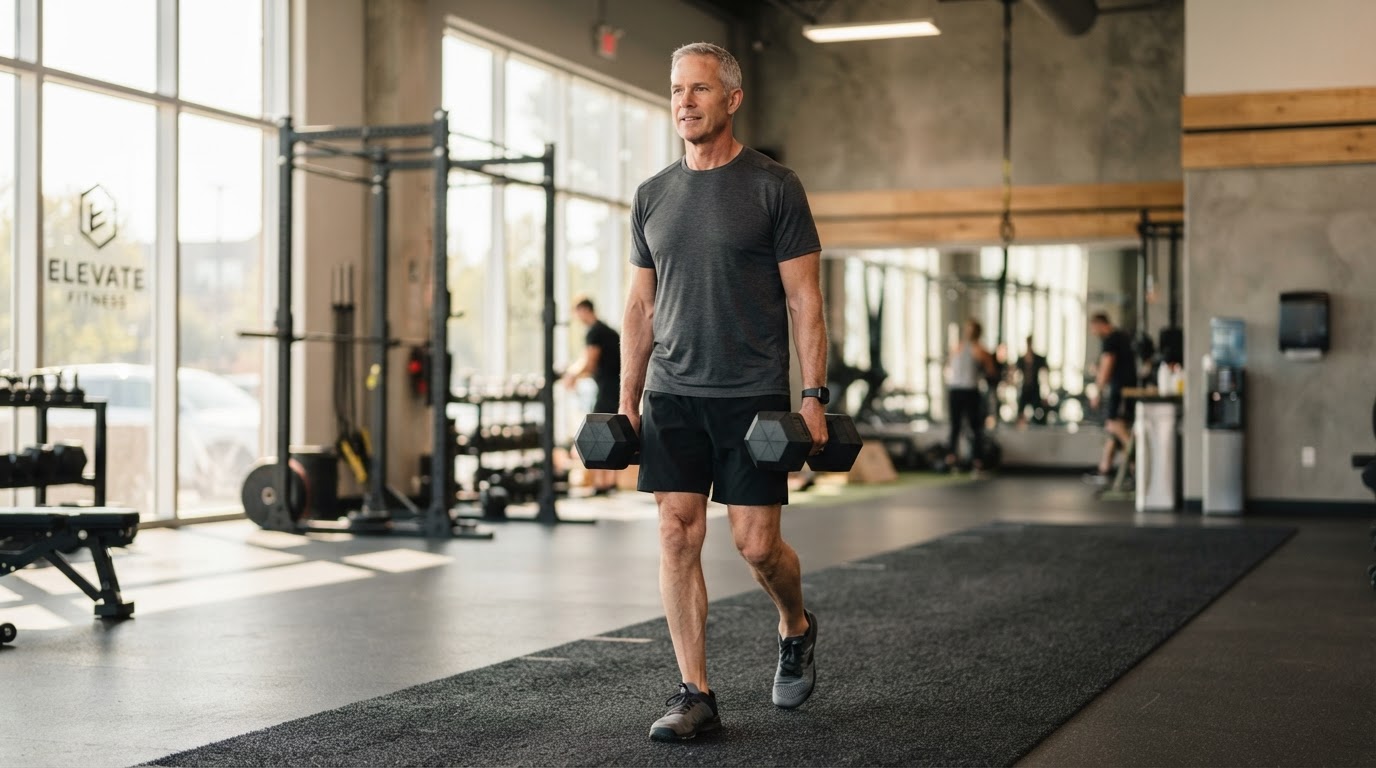
Farmer carries and suitcase carries train grip, trunk stability and total-body coordination. They also have obvious carryover to daily tasks.
9. Core Stability
Planks, dead bugs and carries train the trunk to resist unwanted movement. This is usually more useful than doing endless sit-ups.
10. Power-Oriented Variations
Low-risk power work such as faster sit-to-stands, medicine-ball throws or light kettlebell swings can be introduced when technique and baseline strength are solid.
Best Compound Exercises for Beginners Over 50
Start with goblet squats, machine chest presses, cable or chest-supported rows, Romanian deadlifts and farmer carries.
Best Options for Returning Lifters
Use stable variations first and rebuild volume before returning to demanding barbell work. See our first 30 days back plan.
Best Compound Exercises at Home
Goblet squats, dumbbell Romanian deadlifts, floor presses, one-arm rows, split squats and farmer carries cover nearly everything you need with minimal equipment.
Best Options for Men With Physical Jobs
Use movements that complement your job instead of duplicating excessive fatigue. Supported rows, presses and controlled lower-body work often fit better than very high-volume hinging.
Joint-Friendly Compound Variations
Machine presses, landmine presses, box squats, trap-bar deadlifts, chest-supported rows and step-ups can all be productive alternatives when standard barbell lifts feel less tolerable.
If Your Knees Are Sensitive
Use a comfortable squat depth, box squats, leg presses or step-ups and progress range and load gradually. If knee symptoms are changing exercise selection, use our Strength Training With Bad Knees After 50 guide for more specific modifications.
If Your Lower Back Gets Irritated
Use chest-supported rows, trap-bar or dumbbell hinges and avoid forcing heavy unsupported pulling when fatigue changes your position.
If Your Shoulders Are Sensitive
Neutral-grip dumbbell presses, landmine presses and machine presses may be easier to tolerate than fixed barbell positions.
How to Program Compound Exercises
Most full-body sessions need three to five major compound movements. Use your highest-value lifts first, then add smaller accessory work if time and recovery allow.
See our 2-day full-body plan or 3-day full-body plan for complete examples.
Common Compound Exercise Mistakes
- forcing barbell versions that do not fit your body
- changing exercises too often to progress them
- using too much load before technique is stable
- doing too many compound lifts in one session
- ignoring recovery from work, cardio and other training
- treating joint pain as a normal part of getting stronger
When to Get Professional Guidance
Get individualized guidance if you have persistent joint pain, recent surgery, significant balance limitations, unexplained weakness or cardiovascular issues that change exercise tolerance.
Join the TrueMontis Newsletter
Get practical guidance on strength, recovery, mobility, supplements, nutrition, and staying capable after 50.