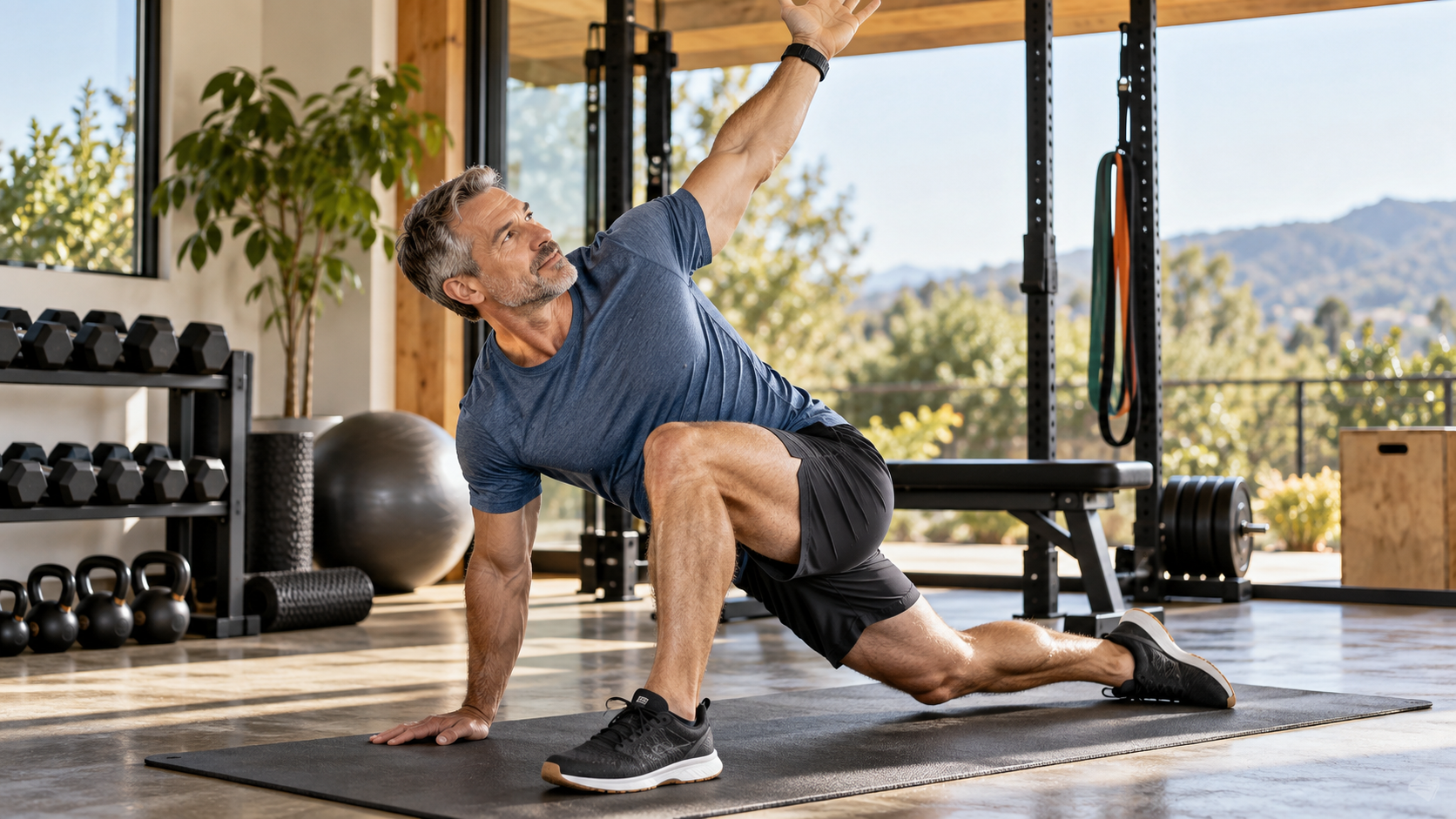
Do You Actually Need Mobility Tools?
No tool is required for good mobility. Walking, strength training through controlled ranges, targeted stretching and simple joint-mobility drills can accomplish a great deal without equipment.
Tools become useful when they make a drill easier to perform, let you target a specific area, or add assistance and feedback that your body alone cannot provide conveniently.
Choose a Mobility Tool by Your Situation
If You Feel Generally Stiff
Start with movement first. A foam roller can be useful before mobility work, but do not assume every stiff feeling needs aggressive pressure.
If One Small Area Feels Tight
A massage ball is easier to position on the glutes, feet, upper back or other small muscle areas than a large roller.
If You Cannot Reach a Stretching Position
A stretching strap can extend your reach without forcing you to round or twist into an awkward position.
If You Need Assistance or Resistance
A resistance band can help with shoulder mobility, ankle work, assisted stretching and active mobility drills.
If You Travel Often
A massage ball and light resistance band are easier to pack than a full-size foam roller.
1. Foam Roller
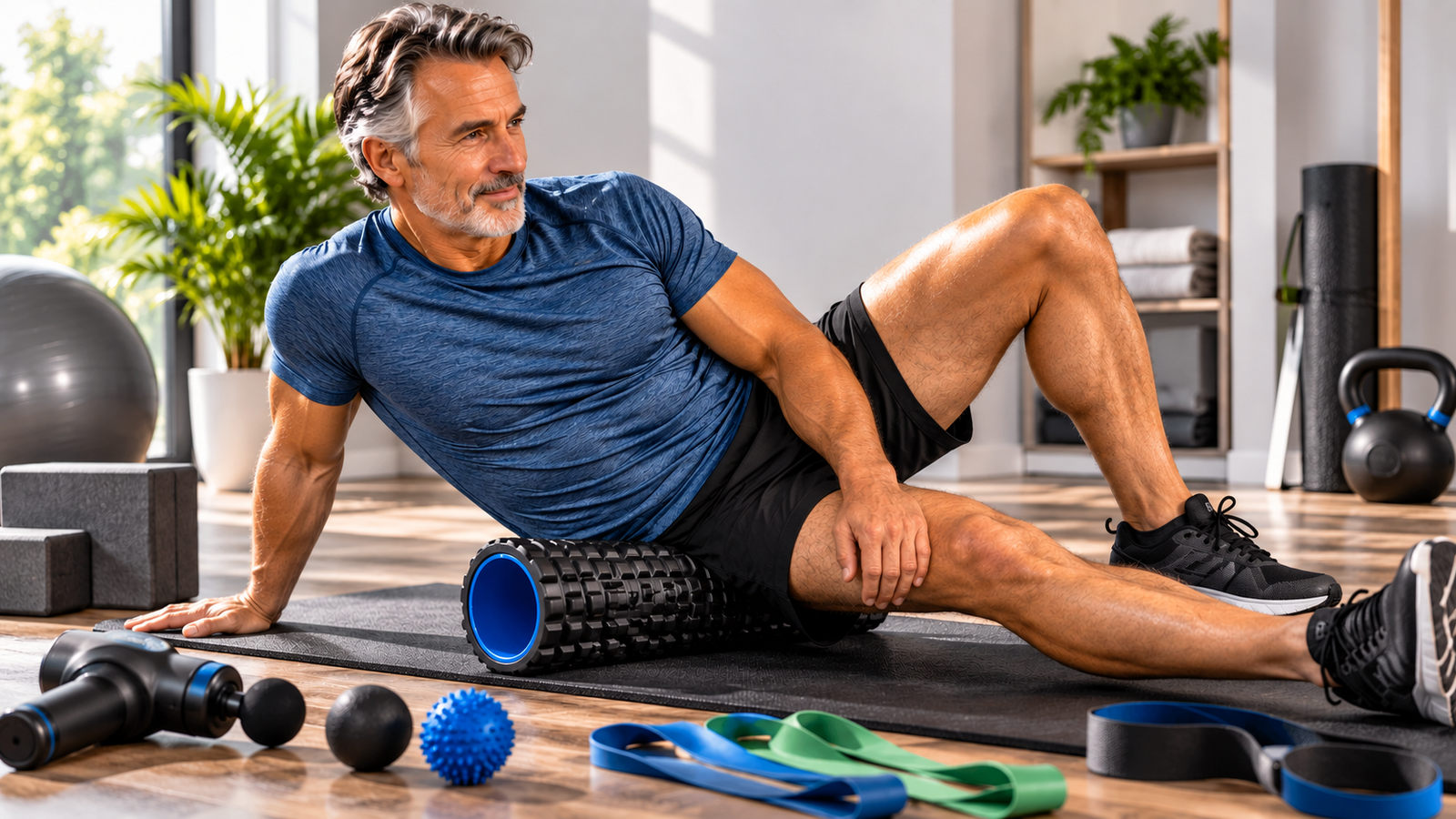
A foam roller is best for larger muscle groups such as the quads, hamstrings, calves, glutes and upper back. Research in healthy adults shows that foam rolling can acutely improve joint range of motion, and longer-term foam-rolling programs may improve range in some muscle groups.
Those studies are mostly not specific to men over 50, so the evidence should not be overstated. The practical use is short-term comfort and range-of-motion support before movement or training.
Start with a smooth medium-density roller. Aggressive ridges and very hard rollers are not automatically more effective.
2. Massage Ball
A massage ball gives you more focused pressure than a roller. It is especially useful for the glutes, soles of the feet, upper-back muscles and other areas where a large roller is awkward.
Use a wall when you want less pressure and the floor when you want more. Avoid pressing directly into joints, the front of the neck or areas where you feel numbness or tingling.
3. Stretching Strap
A stretching strap is useful when limited reach makes a hamstring, calf or shoulder drill difficult. It lets you control the amount of assistance without grabbing the foot or twisting the spine to reach.
The strap should extend your reach, not become a device for forcing a joint past a comfortable range.
4. Resistance Band
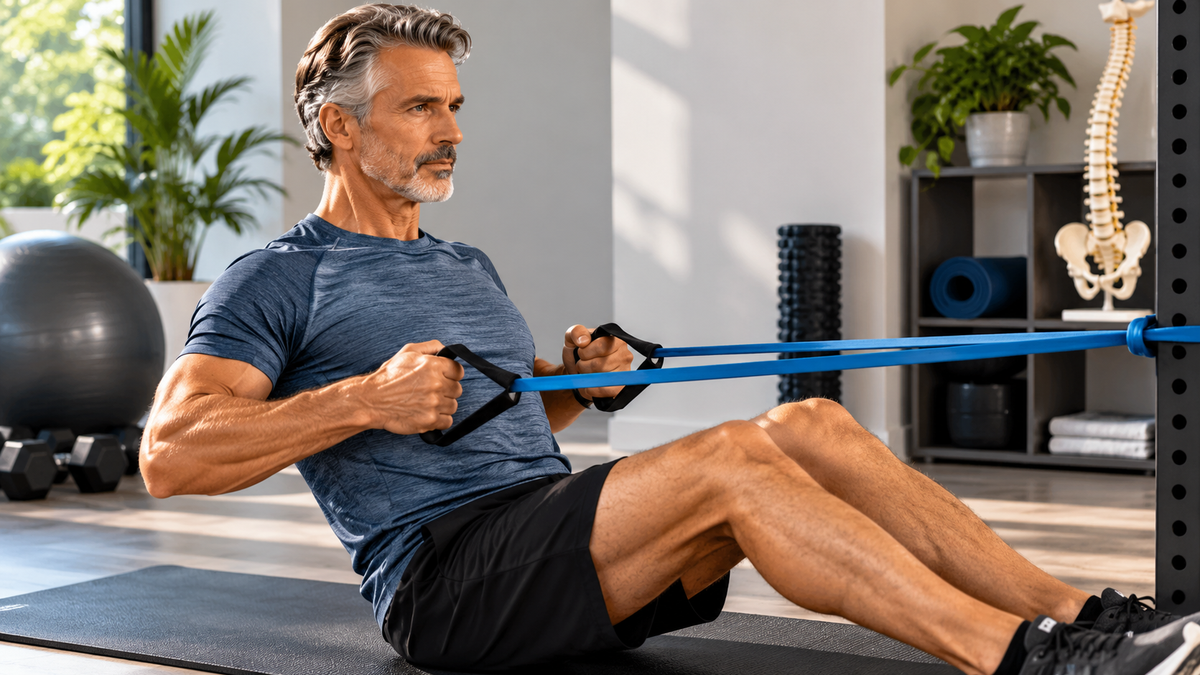
Resistance bands are unusually versatile because they can provide both assistance and resistance. They can support shoulder mobility, ankle drills, hip work and active range-of-motion exercises.
If you also use bands for strength training, see our resistance band exercise guide.
5. Yoga Block
A yoga block changes the height of the floor. That can make a stretch or mobility drill easier to reach without collapsing into a poor position.
Blocks are especially useful for men who are not very flexible yet and need support under a hand, hip or knee.
6. Mobility Stick or Dowel
A dowel or mobility stick gives feedback for shoulder motion, hip hinges and rotational drills. It does not need to be an expensive specialty product; a simple lightweight dowel can perform many of the same tasks.
7. Peanut-Style Massage Tool
A peanut-shaped massage tool has two rounded ends and a center groove. It can be easier to stabilize than a single ball for the upper back and certain hip areas.
Use it on surrounding soft tissue rather than directly grinding over the spine. More pressure is not always better.
Which Mobility Tool Fits Which Problem?
- Large muscle areas: foam roller
- Small targeted areas: massage ball
- Limited reach: stretching strap
- Assistance or active mobility: resistance band
- Need more support or height: yoga block
- Movement feedback: dowel or mobility stick
- Upper-back targeted pressure: peanut-style tool
Best Mobility Tools for Desk Workers Over 50
A massage ball, light resistance band and foam roller cover most desk-related needs. Prioritize upper-back movement, chest mobility and hip motion — but remember that movement breaks matter more than any one tool.
See our posture exercises for men over 50 for a desk-worker framework.
Best Mobility Tools for Men Over 50 Who Lift Weights
A roller can be useful for short pre-training range-of-motion work, while bands can help prepare shoulders and hips. A dowel can reinforce hinge and shoulder positions.
Keep the tool work brief and specific. It should prepare you to train, not become a 30-minute ritual before every workout.
Best Mobility Tools for Walkers, Hikers and Golfers
A massage ball for the feet and glutes, a strap for calves and hamstrings, and a band or dowel for hip and upper-back rotation can be useful.
For joint-specific drills, see our joint mobility guide.
Best Mobility Tools for Travel
A massage ball and light resistance band give the most utility for the least luggage space. A stretching strap also packs flat and can help after long flights or drives.
A Simple Low-Cost Mobility Setup
You can cover most needs with four inexpensive items: one basic foam roller, one massage ball, one long resistance band and one stretching strap.
Before buying anything else, use those tools consistently enough to discover what your actual limitation is.
What You Probably Do Not Need
Specialty devices can be useful, but avoid buying tools because they promise to “break up scar tissue,” permanently “release fascia,” realign your body, or fix chronic pain in a few minutes.
Tools should make movement easier, not replace assessment, exercise or medical care when a real problem exists.
How to Use Mobility Tools Without Overdoing It
Start with short exposures — often 30 to 90 seconds on one area is enough to decide whether the tool helps. Then move the joint through the range you want to use.
If the tool only creates pain and you move worse afterward, that is not useful progress.
Common Mobility Tool Mistakes After 50
- buying too many tools before using the basics
- using excessive pressure because pain feels productive
- rolling directly over joints or bony areas
- using tools instead of strength and movement
- spending more time on tools than on actual mobility drills
- assuming expensive products work better
- ignoring numbness, tingling or worsening symptoms
When to Get Professional Guidance
Seek professional evaluation for persistent pain, numbness, tingling, unexplained weakness, swelling, locking, instability, or a major loss of motion.
If your main issue is flexibility rather than tool selection, see our stretching guide for men over 50.
Join the TrueMontis Newsletter
Get practical guidance on strength, recovery, mobility, supplements, nutrition, and staying capable after 50.