Why Men Over 50 Often Feel Stiffer
Stiffness can come from many directions: long periods of sitting, reduced activity, repetitive work, past injuries, less movement variety and changes in training habits. Age is part of the picture, but it is rarely the entire explanation.
Recent meta-analyses show that regular static stretching can improve flexibility and range of motion. Research in older adults also suggests stretching may support walking and balance outcomes, although stretching should not be treated as a substitute for strength or broader physical activity.
Stretching vs Mobility: Why the Difference Matters
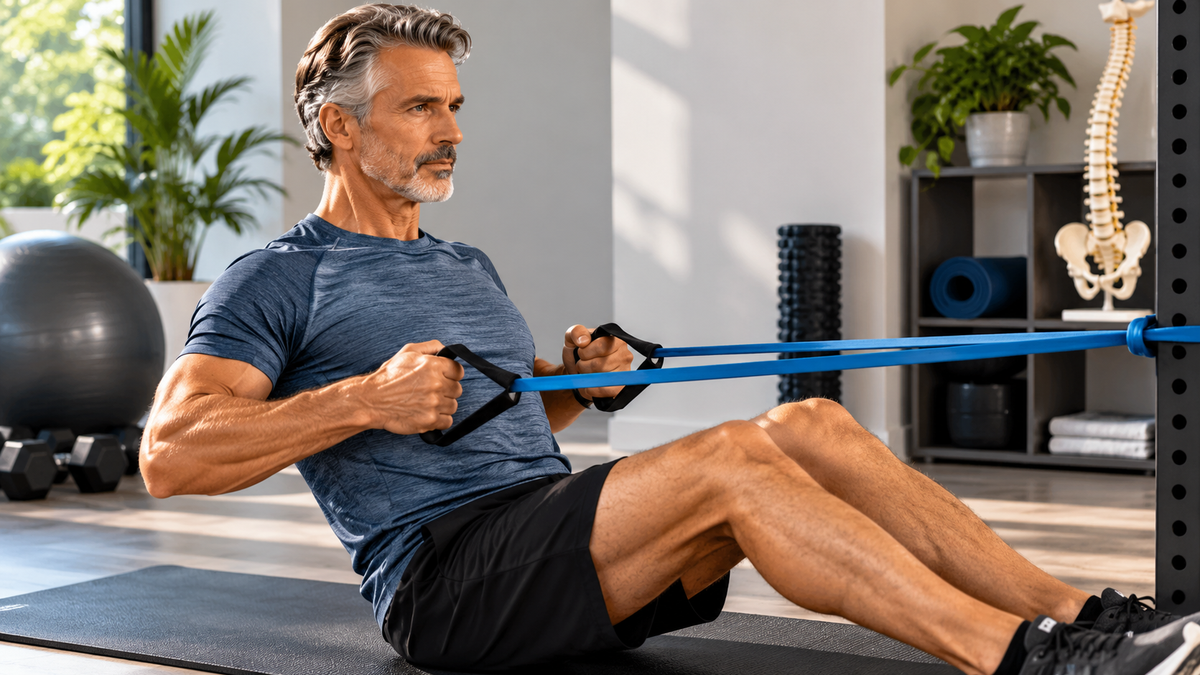
Stretching mainly targets passive flexibility. Mobility is the range you can actively control. You can become more flexible without becoming stronger in that new range.
That is why TrueMontis treats stretching as one tool inside a larger movement strategy. Read our mobility guide for the full framework.
Choose Stretches by Your Situation
If You Sit at a Desk Most of the Day
Prioritize hip flexors, chest, calves and upper-back rotation. More important, interrupt long sitting periods with short movement breaks. Stretching cannot fully compensate for never changing position.
If You Lift Weights
Use dynamic movements before training and reserve longer static holds for separate flexibility work or after the workout. Focus on ranges that actually limit your squat, hinge, press or pull.
If You Do Not Exercise Regularly
Start gently. A few basic stretches may help you feel less restricted, but build toward walking and strength work as appropriate. Stretching alone is not a complete fitness plan.
If You Wake Up Feeling Stiff
Use easy movement first: gentle trunk rotation, ankle motion, hip movement and short stretches. Morning stiffness usually responds better to gradual movement than immediately forcing deep ranges.
If You Walk, Hike or Play Golf
Calves, hips, hamstrings and upper-back rotation are common priorities. The goal is not maximum flexibility; it is enough range to move comfortably and repeatedly.
If You Travel Frequently
Use short hotel-room routines after long flights or drives: hip flexor stretch, calf stretch, chest opening and upper-back rotation. Movement breaks during travel are as important as the stretching session afterward.
1. Hip Flexor Stretch
Use a half-kneeling or standing split stance. Gently tuck the pelvis and move forward until you feel the front of the rear hip lengthen. Avoid simply arching the lower back.
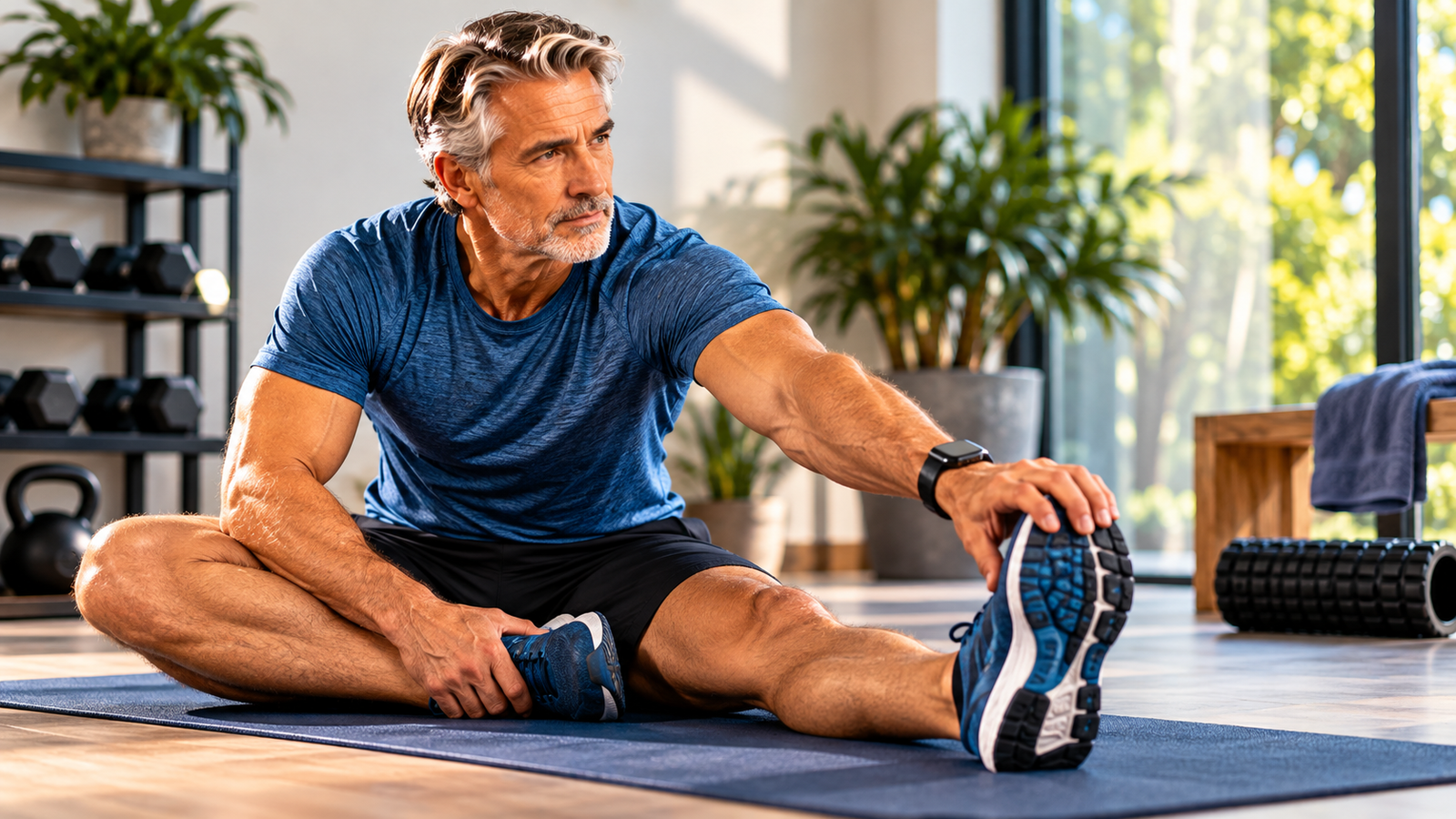
2. Hamstring Stretch
Place one heel on a low support, keep the knee slightly soft, and hinge forward from the hips until you feel the back of the thigh lengthen. Keep the movement controlled.
3. Calf Stretch
Place both hands on a wall, step one leg back and keep the heel down. Lean forward until you feel the calf stretch. A bent-knee version shifts the emphasis lower in the calf.
4. Chest Stretch
Place the forearm against a doorway and gently rotate away until you feel the chest open. Keep the shoulder comfortable and avoid forcing the arm behind the body.
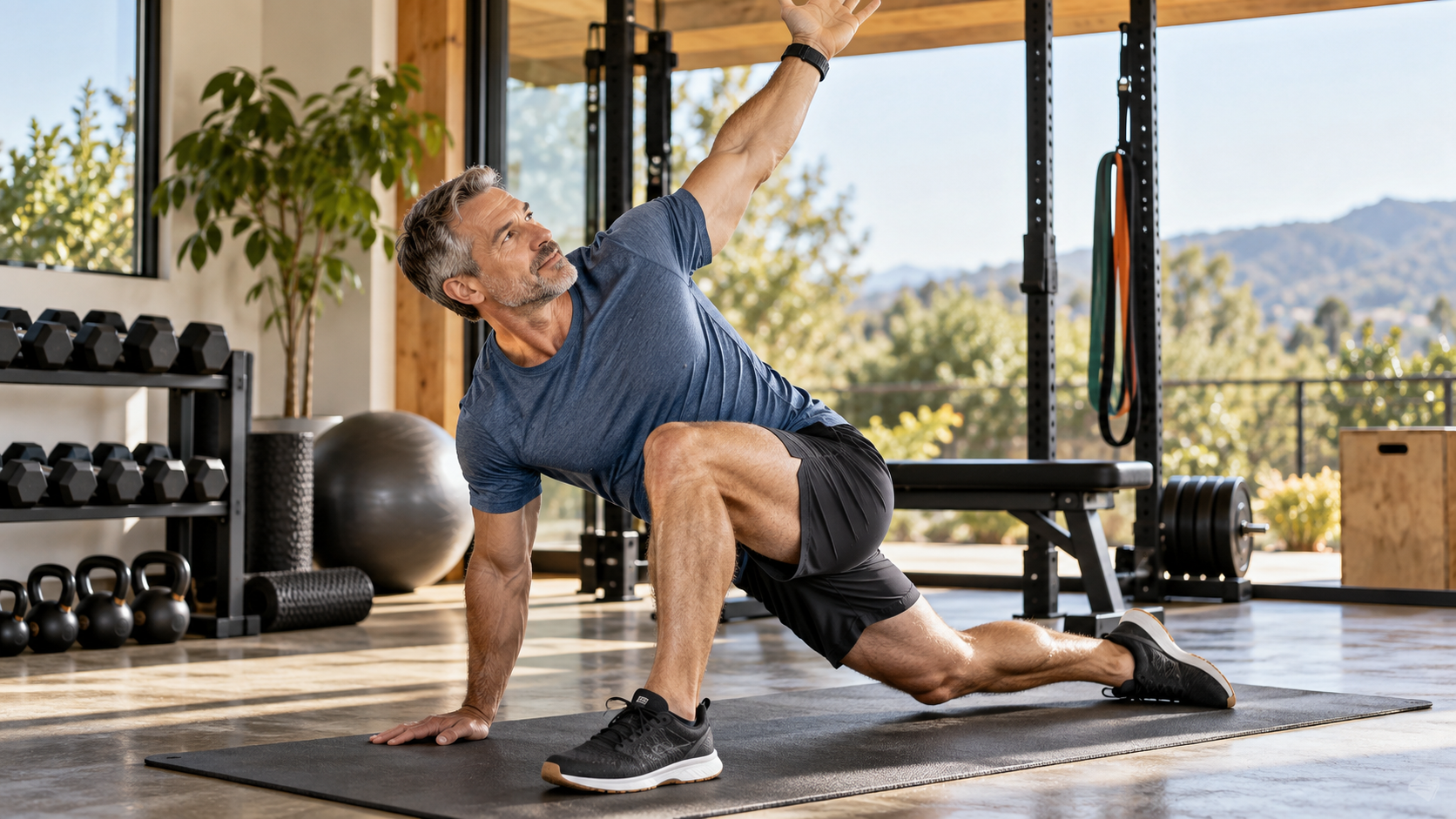
5. Upper-Back Rotation
Sit tall or work from hands and knees, then rotate through the upper back without forcing the lower back. This is especially useful for desk workers and golfers who need thoracic rotation.
6. Shoulder Stretch
Bring one arm across the chest and use the opposite arm to apply gentle pressure. Keep the shoulder relaxed and stop if the movement creates pinching or sharp pain.
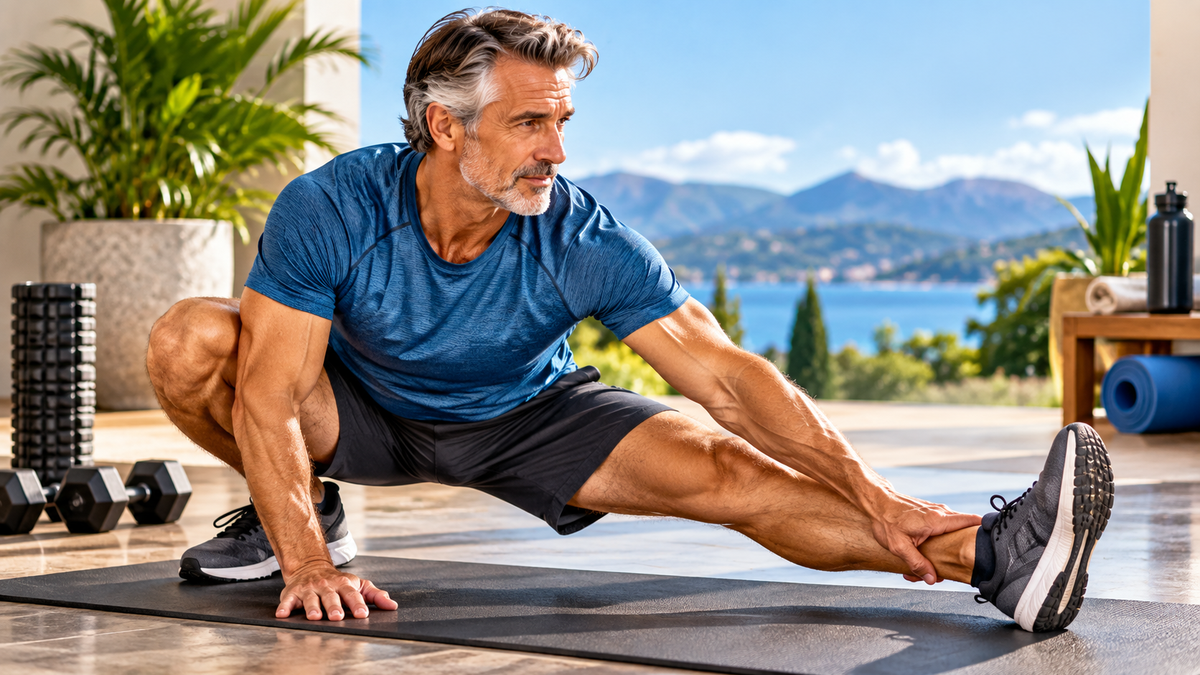
7. Inner-Thigh Stretch
Use a wide stance and shift your hips toward one side while keeping the opposite leg straighter. You should feel the inner thigh of the straighter leg lengthen.
8. Ankle Mobility Stretch
Face a wall, keep the heel down and gently drive the knee forward over the toes. This can help when ankle restriction makes squatting or descending stairs feel limited.
A 10-Minute Stretching Routine for Men Over 50
Use one or two rounds of:
- Hip flexor stretch — 30–45 seconds per side
- Hamstring stretch — 30–45 seconds per side
- Calf stretch — 30 seconds per side
- Chest stretch — 30 seconds per side
- Upper-back rotation — 6–8 controlled reps per side
Adjust the list to your actual restrictions. If one area already moves well, you do not need to stretch it simply because it appears in a generic routine.
Stretching Before Strength Training
Before lifting, prioritize dynamic movement and rehearsal of the exercises you are about to perform. Long static stretching immediately before demanding strength or power work can temporarily reduce performance in some contexts.
A few short targeted stretches can still be useful if one specific restriction prevents you from getting into a comfortable training position.
Stretching After Strength Training
Post-workout stretching is optional. Use it if it helps you relax or maintain flexibility, but do not expect it to erase soreness or replace recovery, sleep and sensible training volume.
How Long Should You Hold a Stretch After 50?
Comfortable static holds of about 20 to 60 seconds are a practical range. More is not automatically better. The recent flexibility literature suggests that regular exposure matters, while the exact dose should be adjusted to the person and muscle group.
Common Stretching Mistakes After 50
- forcing painful ranges
- stretching every body part whether it is restricted or not
- using stretching as a substitute for strength training
- holding long static stretches immediately before heavy lifting
- ignoring numbness, tingling or sharp pain
- trying to match advanced yoga positions instead of your own movement needs
When to Get Professional Guidance
Seek professional evaluation for persistent or sharp pain, numbness, tingling, major loss of motion, unexplained weakness, recent surgery, acute injury or symptoms that worsen with movement.
Join the TrueMontis Newsletter
Get practical guidance on strength, recovery, mobility, supplements, nutrition, and staying capable after 50.