What Recovery Tools Can — and Cannot — Do
Recovery tools can change how you feel after training. Massage, foam rolling and related techniques may reduce perceived soreness or improve short-term range of motion in some people.
They cannot replace sleep, adequate food, hydration, sensible training volume or time. A gadget does not make excessive training stress recoverable.
Choose a Recovery Tool by Your Situation
If You Lift Weights Hard
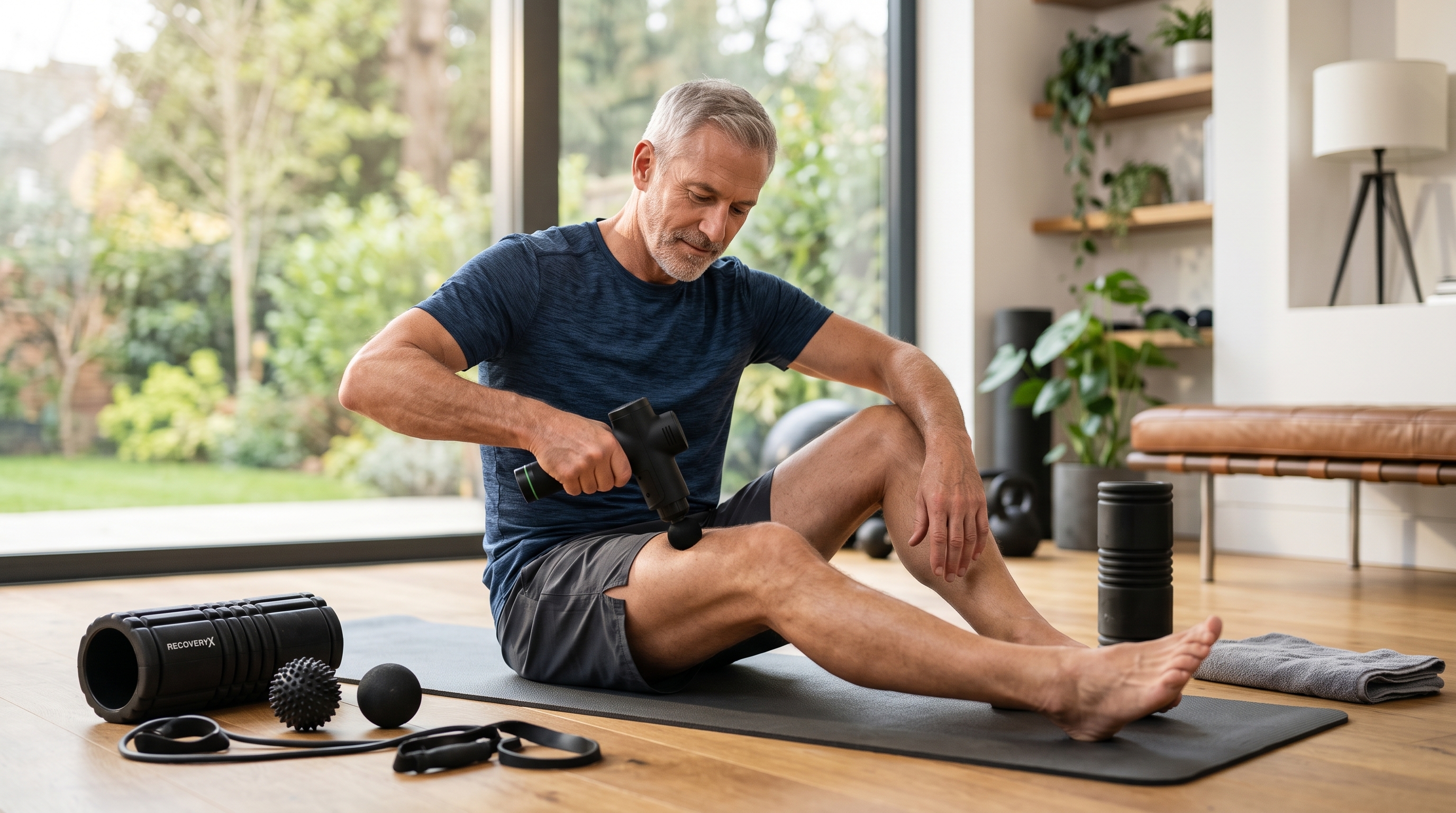
A foam roller, massage gun or massage ball can help with post-workout comfort. Use them selectively on the muscles you actually trained instead of treating the whole body every day.
If Your Job Is Physically Demanding
Your work counts as physical stress. A simple massage tool may feel useful at the end of the day, but reducing total training volume may matter more than adding another device.
If You Walk, Hike or Cycle
Calves, feet, quads and hips are common target areas. A massage ball and foam roller provide more than enough options for many people.
If You Travel Frequently
Choose compact tools: a massage ball, mini roller or short massage stick.
If You Are on a Budget
Start with a basic roller or ball. You do not need a premium electronic device to get useful self-massage.
If You Hate Getting on the Floor
A massage gun or massage stick may be worth more to you because it removes the awkward positioning that foam rolling sometimes requires.
1. Massage Gun
Massage guns use rapid percussion to provide targeted self-massage. Their biggest advantage is convenience: you can reach quads, calves, shoulders and many other areas without getting on the floor.
Use moderate pressure and avoid bones, joints, the front of the neck, fresh injuries and areas with reduced sensation.
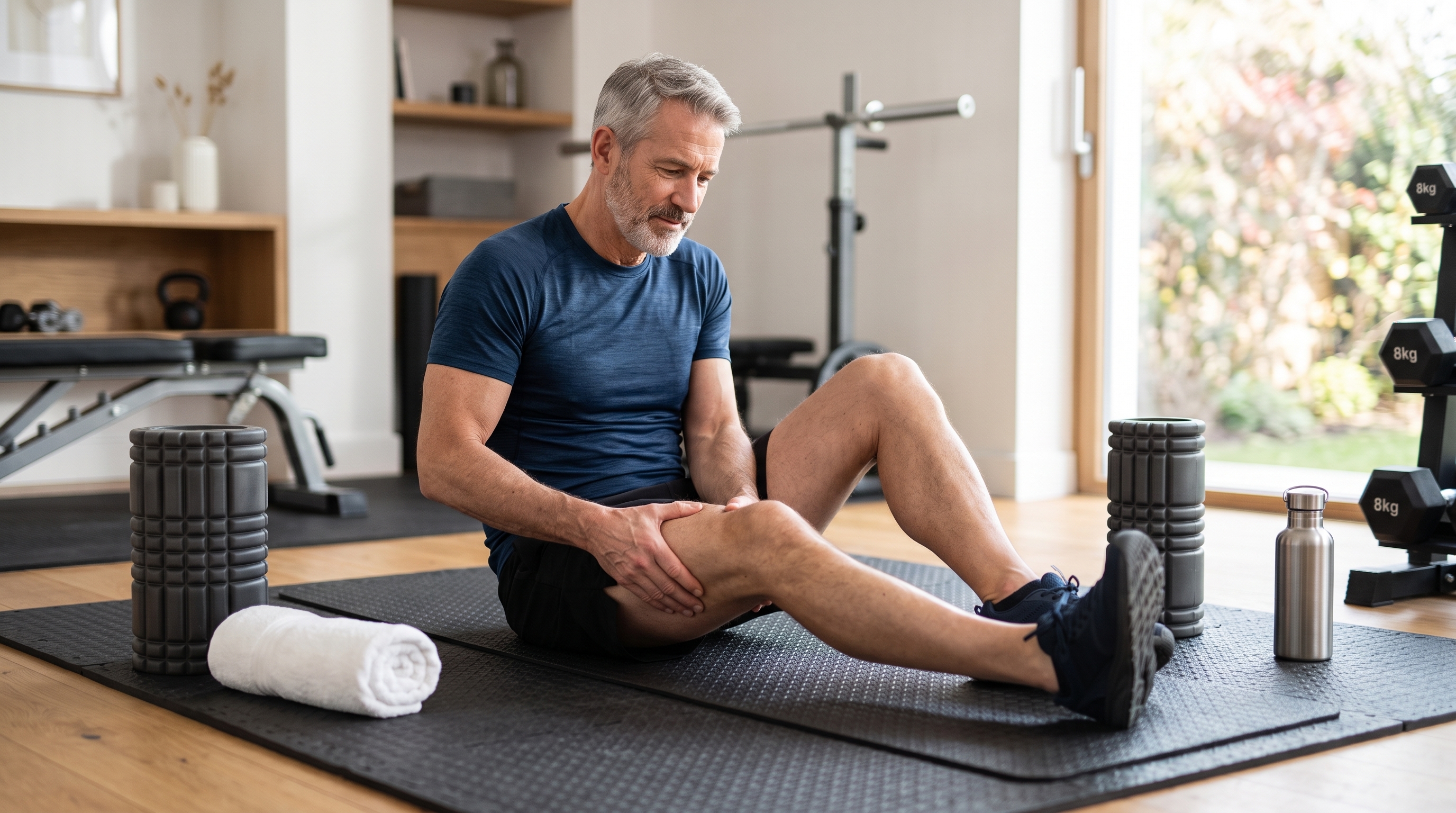
2. Foam Roller
Foam rollers remain one of the most useful low-cost options. Reviews suggest they can improve range of motion and may modestly reduce perceived soreness after demanding exercise.
A medium-density smooth roller is enough for most people. Very hard or heavily textured rollers are not inherently more effective.
3. Massage Ball
A massage ball works well for smaller areas such as the glutes, feet and muscles around the shoulder blade. Using a wall reduces pressure; using the floor increases it.
4. Massage Stick
A massage stick lets you control pressure with your hands and works well on the quads, hamstrings and calves. It is easier than foam rolling for men who have difficulty getting down to the floor.
5. Compression Gear
Compression garments and sleeves are marketed heavily for recovery. Reviews suggest they may reduce perceived soreness and support some recovery outcomes, but effects vary and are generally modest.
Use correctly sized garments and avoid excessive compression if you have circulation concerns unless a healthcare professional has advised otherwise.
6. Heat and Cold Tools
Heating pads can feel relaxing for ordinary muscular stiffness, while cold packs can temporarily reduce discomfort after certain activities.
Neither should be treated as a cure. Avoid prolonged direct skin exposure, and do not use extreme temperatures on areas with reduced sensation.
7. Simple Low-Cost Recovery Options
Some of the best recovery options cost little or nothing: easy walking, a warm shower, changing position, light mobility work and adequate food and fluids.
Best Recovery Tools After Strength Training
After lifting, use tools primarily for comfort. A short foam-rolling or massage session can be reasonable, but do not use it as permission to train the same muscles hard again before you are ready.
If soreness is frequent, review your overall program and our strength-training frequency guide.
Best Recovery Tools for Men Over 50 With Physical Jobs
If your workday includes lifting, carrying, standing or repetitive movement, your total physical workload may already be high. A massage ball, roller or heat may feel good, but training volume should account for the work you already perform.
Best Recovery Tools for Walking, Hiking and Cardio
A massage ball for the feet and glutes and a roller for the calves and thighs cover most needs. Repeated pain deserves more attention than a recovery gadget.
Best Recovery Tools for Travel
A massage ball or short stick requires almost no space and can be used after long drives, flights or hotel workouts.
Best Budget Recovery Setup
Start with one foam roller and one massage ball. That combination covers large and small areas for a fraction of the price of most electronic recovery devices.
Can Recovery Tools Reduce DOMS?
Delayed-onset muscle soreness often follows unfamiliar or demanding exercise. Massage and foam rolling may reduce perceived soreness, but the size of the benefit varies.
The most reliable way to reduce repeated severe soreness is to progress training gradually.
Does Stretching Speed Recovery?
Stretching can feel good and support flexibility, but systematic-review evidence has not shown a clear advantage over passive recovery for restoring strength or reducing DOMS.
Stretch because it helps your movement, not because you expect it to erase soreness.
How to Use Recovery Tools Safely
- start with light to moderate pressure
- use short sessions before adding more time
- avoid direct pressure over joints, bones and acute injuries
- stop if you create numbness, tingling or sharp pain
- avoid aggressive work on bruised or swollen tissue
- follow manufacturer instructions for powered devices
What You Probably Do Not Need
Be cautious with products that promise to flush toxins, permanently break up fascia, erase inflammation instantly or dramatically accelerate muscle repair.
Common Recovery Tool Mistakes After 50
- buying multiple gadgets before fixing sleep and training volume
- assuming more pressure produces faster recovery
- treating every soreness as an injury
- using tools directly on painful joints
- using temporary relief as a reason to train too hard again
- believing premium price automatically means better recovery
When to Get Professional Guidance
Seek professional evaluation for severe pain, substantial swelling, bruising without a clear cause, weakness, numbness, tingling, loss of function, or symptoms that do not improve as expected. If you are comparing more expensive devices rather than simple tools, use our recovery equipment buying guide.
Join the TrueMontis Newsletter
Get practical guidance on strength, recovery, mobility, supplements, nutrition, and staying capable after 50.