Why Sleep Matters for Recovery After 50
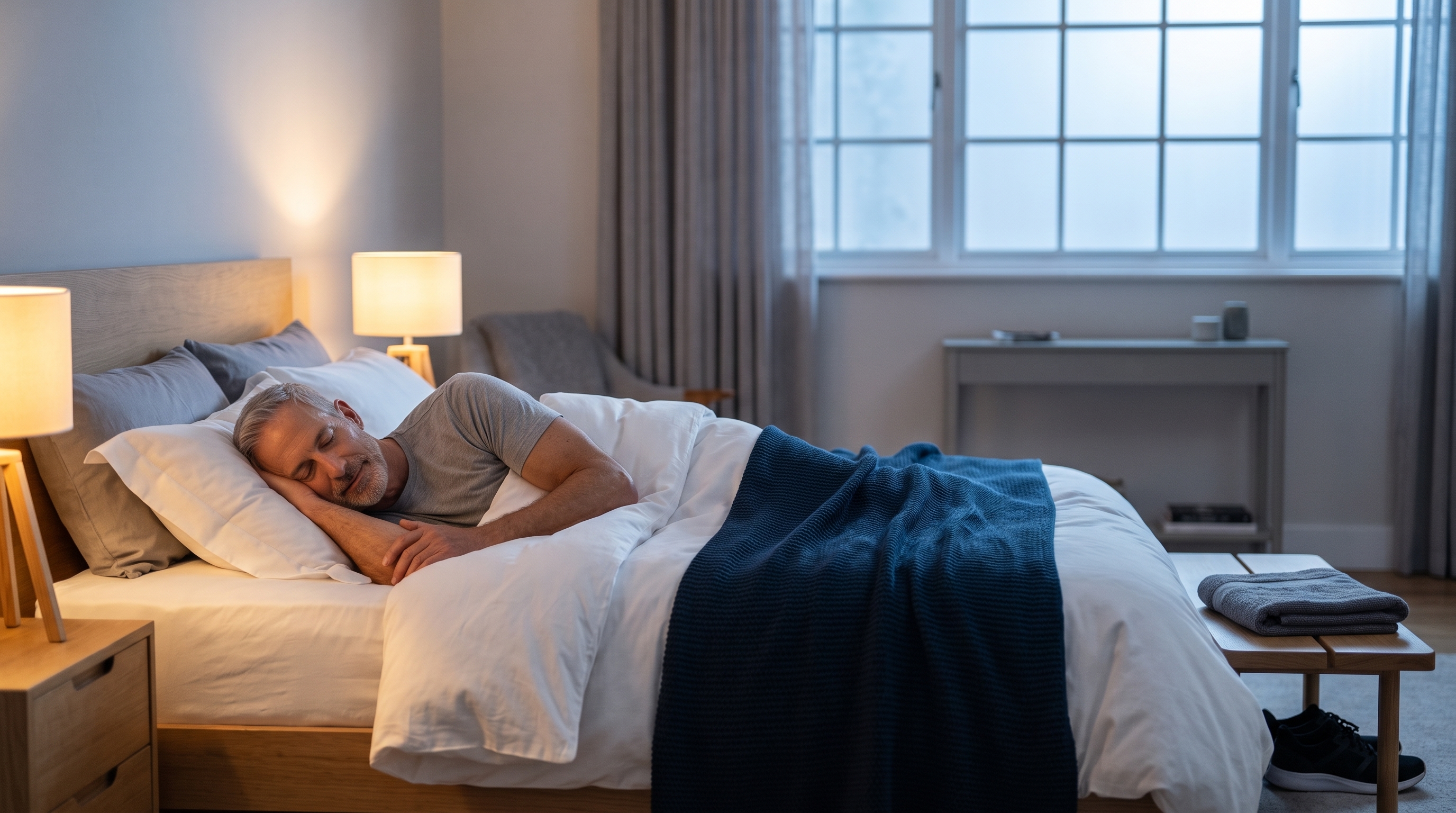
Sleep supports physical and mental recovery. Inadequate sleep can reduce alertness, increase fatigue and impair performance, while chronic short sleep is associated with broader health risks.
For training, the practical effect is that poor sleep can make the same workout feel harder and can reduce the quality of the next session.
How Much Sleep Do Men Over 50 Need?
The American Academy of Sleep Medicine recommends at least seven hours of sleep per night for adults on a regular basis. CDC guidance lists 7–9 hours for adults ages 61–64 and 7–8 hours for adults 65 and older.
These are population-level recommendations, not a personal prescription. If you train hard, are recovering from sleep debt or consistently wake unrefreshed, your individual need may be higher.
Sleep Quality vs Sleep Duration
Seven hours in bed is not the same as seven hours of restorative sleep. Frequent waking, breathing problems, alcohol, pain, stress and an inconsistent schedule can all reduce sleep quality.
Track how you feel during the day, how consistently you wake rested and whether your training performance is stable instead of relying only on one sleep score from a wearable.
Choose a Sleep Strategy by Your Situation
If You Wake Very Early for Work
Your wake time may be fixed, which makes bedtime the main variable you can control. Move evening tasks earlier and protect a consistent wind-down period.
If You Lift Weights Hard
Hard training increases recovery demand. If sleep has been poor for several nights, reduce training stress before adding more recovery products.
If Your Job Is Physically Demanding
Your job counts as workload. Training plus physical labor can raise total fatigue even when gym volume looks reasonable on paper.
If Stress Keeps Your Mind Active
Use a repeatable shutdown routine: reduce screens, prepare tomorrow's tasks, lower lighting and give yourself a consistent transition into bed.
If You Travel Frequently
Protect sleep timing as much as possible, get daylight at the destination and avoid overloading the first workout after major time-zone changes.
If You Wake Up Very Early for Work
Men who start work before sunrise often try to solve recovery by sleeping later on days off. That can help somewhat, but a large shift in schedule can also make regular bedtime harder.
A more reliable approach is to work backward from wake time and set a bedtime that gives you a realistic opportunity for seven or more hours.
If You Train Hard or Lift Weights
Hard strength sessions, especially high-volume leg work or unfamiliar exercises, can increase perceived recovery demand. Protect sleep on those nights rather than assuming a supplement or device can make up for insufficient rest.
If sleep problems keep repeating, review your weekly strength-training frequency.
If You Have a Physical Job
Standing, lifting, carrying and repetitive work add to total physical stress. If you also train hard, sleep may become the first recovery bottleneck.
Consider shorter gym sessions or fewer hard sets during especially demanding work weeks instead of forcing the same program year-round.
If Stress Keeps Your Mind Active at Night
A consistent bedtime routine can reduce the number of decisions and stimulating activities close to sleep. Reading, a warm shower, low lighting and preparing tomorrow's tasks earlier can all help create a clearer transition.
If You Travel or Change Time Zones
Travel combines schedule disruption, light exposure changes, unusual meals and often less physical activity. Keep the first workout at the destination easier if sleep has been short or fragmented.
Caffeine and Recovery Sleep
Caffeine can improve alertness, but taking it too late can interfere with sleep for some people. If you have trouble falling asleep, move your last caffeine dose earlier before assuming you need a sleep supplement.
Alcohol and Sleep Quality
Alcohol may make you feel sleepy, but sedation is not the same as high-quality sleep. NIA guidance for older adults recommends avoiding alcohol as part of healthy sleep habits.
Screens and Bedtime
Screens can extend bedtime and keep your attention engaged. AASM guidance recommends limiting handheld electronics before bed, and recent survey data show many adults report worse sleep when using phones or tablets for stressful news content at bedtime.
Do Naps Help Recovery?
Naps can reduce sleepiness and may help after a short night, but they work best as a supplement rather than a substitute for adequate nighttime sleep.
If naps make it harder to fall asleep at night, shorten them or move them earlier in the day.
Snoring and Sleep Apnea Warning Signs
Loud habitual snoring, witnessed breathing pauses, gasping, morning headaches and excessive daytime sleepiness can be signs of sleep-disordered breathing.
A consumer wearable can provide clues about sleep patterns, but it does not diagnose sleep apnea. Persistent symptoms deserve medical evaluation.
A Practical Night Recovery Routine
- set a consistent target bedtime
- finish caffeine early enough that it does not interfere with sleep
- keep late meals lighter if large meals disturb sleep
- dim lights and reduce stimulating screen use
- prepare clothes, meals or tasks for the next morning earlier
- keep the bedroom dark, quiet and comfortable
What to Do After a Bad Night of Sleep
One bad night does not automatically ruin your training. Keep the session if you feel coordinated and alert, but consider reducing load, total sets or effort.
Avoid chasing fatigue with excessive caffeine late in the day, because that can create a second poor night.
When to Adjust Training Because of Poor Sleep
Repeated poor sleep plus declining performance, unusual soreness, irritability or loss of motivation is a stronger signal than one isolated night.
In that situation, reduce training stress and address the sleep problem rather than assuming you need to push harder.
Common Sleep and Recovery Mistakes After 50
- trying to recover from chronic short sleep with supplements
- using alcohol as a sleep aid
- taking caffeine late and then blaming age for poor sleep
- changing bedtime dramatically between weekdays and weekends
- ignoring loud snoring or breathing pauses
- training at full intensity after several nights of poor sleep
When to Get Professional Guidance
Talk with a healthcare professional if sleep problems are persistent, if you regularly wake unrefreshed despite enough time in bed, or if you have loud snoring, breathing pauses, gasping, severe daytime sleepiness or symptoms that affect driving or work.
Join the TrueMontis Newsletter
Get practical guidance on strength, recovery, mobility, supplements, nutrition, and staying capable after 50.